
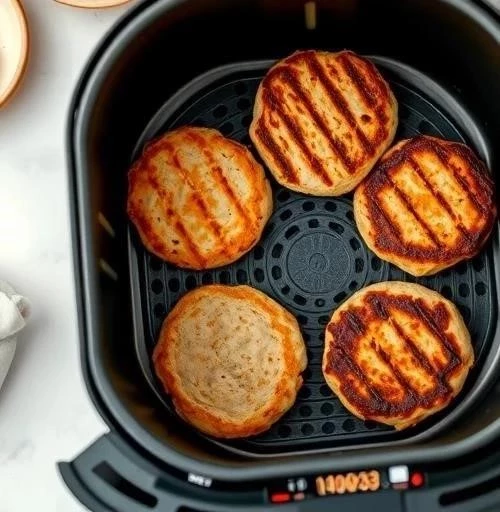
An air fryer turns a humble patty into a tiny kitchen triumph: browned outside, juicy within, and ready without a pan full of splattering oil. The short answer is about 12–18 minutes at 180°C (360°F) for fresh patties. The exact time depends on their thickness, ingredients, starting temperature, and your particular appliance—so use the clock as a guide, not a promise.
The quick timing guide
- Thin fresh patties, about 1–1.5 cm: 10–12 minutes at 180°C (360°F).
- Medium patties, about 2 cm: 12–16 minutes at 180°C (360°F).
- Thick patties, 2.5–3 cm: 16–20 minutes at 175–180°C (350–360°F).
- Frozen patties: usually 18–22 minutes at 180°C (360°F); separate them if possible and check the centre carefully.
Turn the patties halfway through cooking. If your air fryer runs hot, or the patties are small, start checking a few minutes early. If they are extra thick, add time in short increments rather than guessing all at once.
A reliable method, step by step
- Shape evenly. Make patties of similar thickness so one doesn’t finish while another is still catching up. A small shallow dent in the middle can help a patty stay flatter as it cooks.
- Preheat if your model recommends it. A 3–5 minute preheat can help the outside brown more evenly, but not every air fryer needs one.
- Arrange with breathing room. Place patties in a single layer, leaving space around them for hot air to circulate. Cook in batches if necessary; a crowded basket can lead to pale, uneven results.
- Air-fry at 180°C (360°F). Cook for roughly half the estimated time, turn with tongs, then continue until done. A light brush of oil is optional, especially for lean mixtures.
- Check the thickest part. A food thermometer is the most dependable way to know the centre is safe. Rest the patties for about 2–3 minutes before serving.
Don’t let colour be the judge
A browned surface is delicious, but it cannot reliably tell you whether the middle has reached a safe temperature. For ground beef, pork, lamb, and veal, aim for 71°C (160°F). For ground chicken or turkey, aim for 74°C (165°F). Insert the thermometer sideways into the centre of a thinner patty, avoiding the basket. Follow local food-safety guidance if it differs.
These temperatures matter because grinding can spread bacteria through the meat, rather than leaving them only on the surface. If you are cooking a mixed-meat patty, use the safe temperature required for its poultry ingredients.
Fresh, frozen, homemade: what changes?
Fresh patties generally cook faster than frozen ones. Frozen patties can go straight into the air fryer, but they need extra time and a careful temperature check. If they are stuck together, don’t force them apart with a knife while frozen; cook briefly until they loosen, separate safely, then continue in a single layer. Homemade patties may contain onion, breadcrumbs, cheese, or vegetables, all of which can affect moisture and cooking speed. Thickness still matters more than the label on the recipe.
Small fixes for better patties
- Too dry? Try a slightly lower temperature, check earlier, and avoid pressing the patties. Lean meat dries quickly.
- Not browned enough? Give the basket more space, pat excess surface moisture away, or add a minute or two after confirming the centre is safe.
- Uneven batch? Turn the patties halfway and rotate their positions if your air fryer has a hot spot.
- Want melted cheese? Add it during the final minute or two so it melts without becoming a runaway, bubbly mess.
The easy rule to remember: start at 180°C (360°F), flip halfway, and expect about 12–18 minutes for fresh patties. Then let a thermometer—not wishful thinking—make the final call. Your air fryer supplies the hot breeze; you supply the check that turns dinner from a guess into a good thing.

2 Comments. Оставить новый
The advice to leave room around each patty is wonderfully practical—hot air needs its own little runway. A clear, reassuring guide that helps dinner land juicy rather than merely punctual.
I like how this turns air-frying from guesswork into a small, delicious experiment. The reminder that a browned crust can keep a secret makes the thermometer the article’s quiet hero.