
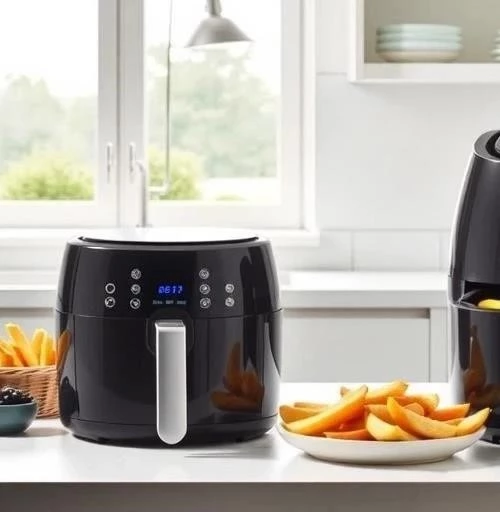
The best air fryer is not necessarily the one with the most presets or the highest price. It is the model that fits your household, counter space and usual meals. Capacity, basket design, ease of cleaning and dependable temperature control matter more in everyday use than a long feature list. Before choosing a brand, decide how much food you need to cook at once and whether you want a simple appliance or a more versatile one.
Start with capacity
For one or two people, a compact model of about 3–4 litres is often sufficient for a portion of vegetables, snacks or a few pieces of chicken. For a household of two to four, a 5–6.5-litre basket is a more practical starting point: it leaves room to spread food out, which helps it brown rather than steam. Larger households may prefer a bigger single drawer or a dual-basket model, especially if they regularly cook a main dish and a side at the same time.
Do not judge capacity by the litre figure alone. Basket shape and usable cooking area affect how much food fits in a single layer. A tall, narrow basket may hold a reasonable volume but be less convenient for chips or several pieces of meat. Check the appliance’s external dimensions too; a large fryer can be awkward on a crowded counter and difficult to store.
Choose the right layout
- One basket: The best all-round choice for most people. It is usually simpler, takes up less space and is easy to operate. Choose a larger capacity if you often cook for several people.
- Two baskets: Useful when you want to cook separate foods at different temperatures, or finish them at the same time. The trade-off is a larger footprint, more parts to wash and sometimes less room in each drawer than one large basket offers.
- Oven-style design: Offers shelves and more flexibility for certain foods, but can require more cleaning and may not cook as evenly on every level. Consider it if you will use the extra space regularly.
A dual-basket appliance is not automatically better. If you mostly make one large batch, a roomy single basket may be more useful. Conversely, if dinner often includes foods with different cooking times, separate drawers can save effort. Think about your actual routine, not the number of functions advertised.
What specifications really matter?
Most household air fryers use a heating element and a fan to circulate hot air. A higher wattage can help an appliance heat quickly, but it is not a guarantee of crispier food: basket design, airflow, load size and temperature control also matter. For reliable results, look for adjustable temperature and time settings, clear controls, and a range suitable for the dishes you make. Presets are convenient, but they do not replace the ability to set time and temperature yourself.
Digital controls and app connectivity are optional conveniences, not essentials. Touchscreens may look modern, while physical buttons can be easier to use and may cost less. Smart features make sense if you will genuinely use remote monitoring or saved programs; otherwise, spend the money on capacity, build quality or a better-designed basket. A viewing window can be useful, but it does not guarantee even cooking.
Cleaning and everyday comfort
Check whether the basket and crisper plate are removable and dishwasher-safe, and whether their coating has clear care instructions. A non-stick surface is convenient, but it should be protected from metal utensils and abrasive cleaning. Also consider the handle, the weight of a full basket, how easily crumbs can be removed, and whether the appliance’s shape leaves enough room for ventilation. These small details determine whether you will enjoy using it regularly.
Noise, smell during initial use and ease of wiping the interior are worth checking in independent reviews. Look for repeated comments across several owners rather than treating one complaint or glowing review as conclusive. Confirm the warranty, availability of replacement parts and local service before buying, particularly for an expensive model.
Which types are worth considering?
Names appearing in 2026 roundups include Philips models such as the HD9270 or HD9280, Xiaomi Smart Air Fryers, Bosch MAF-series appliances, and options from Tefal, REDMOND and Polaris. Treat these as a shortlist, not a universal ranking: versions, prices and availability vary by market. Compare the exact model number and basket capacity, then check recent owner feedback for cleaning, reliability and cooking consistency. A well-reviewed basic model can be a better purchase than a premium appliance whose extra functions you will not use.
Practical recommendation
For most homes, choose a single-basket fryer around 5–6.5 litres, with adjustable settings, a removable easy-to-clean basket and dimensions that fit your kitchen. Choose a compact 3–4-litre model if space is tight or portions are small. Choose two baskets only if cooking separate foods together is a frequent need. Pay extra for a larger, better-made appliance or a useful layout—not simply for more presets, a screen or a smart-home label.
Bottom line: Buy for the meals you cook most often. Compare usable cooking area, cleaning, warranty and real-world reviews before settling on a model. That approach is more dependable than picking whichever fryer tops a changing “best of the year” list.



5 Comments. Оставить новый
The guidance is clear and balanced. It explains why a compact fryer may suit a smaller household while also showing when a larger basket or dual-drawer layout could be worthwhile, without suggesting that one design is best for everyone.
I appreciate the focus on everyday usability rather than a long list of presets. Capacity, cleaning and temperature control are sensible priorities, and the article gives readers a clear starting point for comparing models.
The advice to consider usable cooking area rather than relying only on the litre rating is particularly practical. Basket shape can make a noticeable difference when you want food to brown evenly in a single layer.
The comparison of single-basket, dual-basket and oven-style designs makes the trade-offs easy to understand. In particular, noting that two drawers can mean less room in each one helps readers judge whether the added flexibility is worth the extra space and cleaning.
This is a helpful guide because it starts with household size and everyday cooking habits instead of pushing readers toward the largest model. The reminder to check external dimensions is also useful for anyone with limited counter space.