
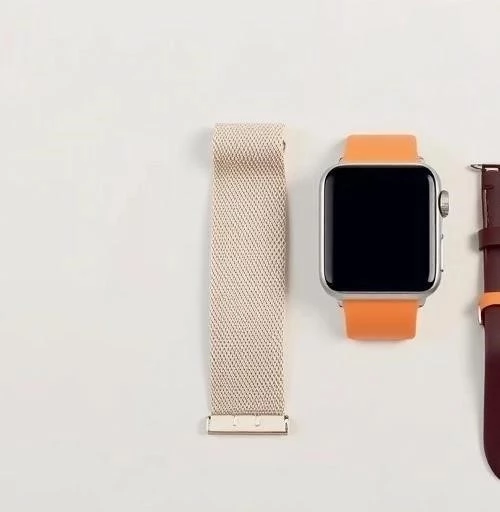
The right Apple Watch band depends on three things: whether it fits your watch case, whether it suits your wrist and activities, and whether you like its appearance. Comfort and secure fastening matter as much as color. A band that looks good but slips, pinches, or irritates the skin may be unsuitable for everyday wear.
Check compatibility first
Apple Watch bands attach to the watch through a sliding connector, and the connector must match the case-size family. In general, bands made for the smaller family—38, 40, 41, and 42 mm cases—fit one another. Bands for the larger family—44, 45, 46, and 49 mm cases—are generally interchangeable. However, older models labeled 42 mm belong to the larger family, so the number alone can be misleading. Check the exact watch model and the band’s compatibility information before buying.
Case size is not the same as wrist size: it describes the watch itself. To identify your model, check the Watch app on your iPhone or the engraving on the back of the watch. If purchasing a third-party band, confirm that it is designed for your specific size family and that its connector locks securely into place.
Choose a material for how you use the watch
- Fluoroelastomer or other silicone-style bands: Lightweight, flexible, and easy to rinse, these are practical for exercise and daily use. Look for a comfortable fit that does not trap excessive sweat.
- Nylon and woven bands: Soft, breathable, and often adjustable, they work well for casual wear and long periods of use. They can absorb water and may take longer to dry than smooth materials.
- Leather: A traditional option for work or formal outfits. Leather can develop a distinctive appearance over time, but repeated exposure to water, sweat, and harsh conditions may shorten its life.
- Metal: Stainless-steel and other metal bands can create a polished look and suit business or dress occasions. Check the weight, clasp, and adjustment range; some styles need links removed to achieve a proper fit.
- Sport Loop and similar hook-and-loop designs: These offer easy, fine adjustment and are useful when the wrist changes slightly in size during activity. Make sure the fastening remains secure and the fabric is comfortable against your skin.
Get the fit right
A band should hold the watch in place without making the wrist feel squeezed. For heart-rate readings and workouts, the back of the watch should sit against the skin; it may be worn a little more snugly during exercise, then loosened afterward. Avoid a fit that leaves persistent marks, causes numbness, or restricts movement.
Measure your wrist with a flexible tape, or use a strip of paper and compare it with the manufacturer’s sizing guide. Check the stated wrist range rather than relying only on labels such as “small” or “large,” since sizing varies among brands. If you are between sizes, an adjustable band can be easier to fit. Keep the watch sensor clean and dry, particularly after exercise.
Match the band to your routine
For swimming or frequent workouts, choose a water-resistant band that is easy to clean, and follow the material maker’s care instructions. For office wear, a neutral leather or metal style may coordinate with clothing. For travel and everyday use, comfort, a dependable clasp, and simple cleaning may be more useful than a decorative finish. A versatile color such as black, silver, or navy can pair with a wider range of outfits, while brighter colors make the watch more noticeable.
Before you buy
Confirm the case-size compatibility, wrist measurement, material, and return policy. Inspect the connector and clasp, especially on third-party products, and avoid forcing a band into the watch. Apple Watch bands are interchangeable, so one everyday band and a second option for sports or formal occasions can cover different needs. The best choice is the one that fits your exact watch, stays secure, feels comfortable, and suits the way you plan to use it.
2 Comments. Оставить новый
The article provides a useful overview of Apple Watch band compatibility and explains why case size should be checked before purchase. Its discussion of materials also helps readers consider comfort and intended use.
The guidance is organized around practical factors, including fit, activity, and material. The compatibility notes are particularly helpful for avoiding confusion between similarly labeled case sizes.