
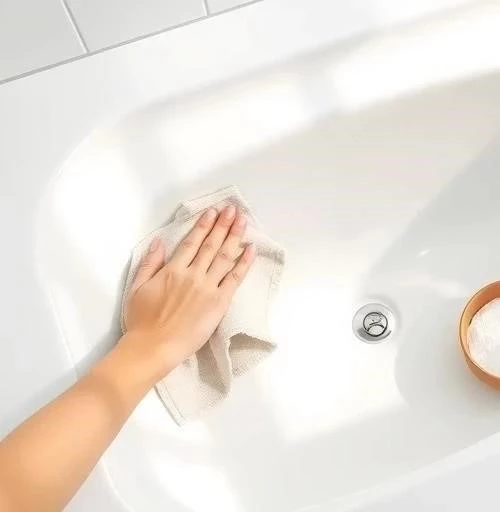
Acrylic is smooth and easy to maintain, but its surface can be scratched or dulled by harsh cleaners. The best choice for routine cleaning is usually warm water, a little mild dish soap, and a soft microfiber cloth or non-abrasive sponge. This simple approach removes soap film and everyday grime without damaging the finish. Check your bathtub’s care guide as well, since manufacturers may give specific instructions.
Safe cleaning, step by step
- Rinse the tub with warm water to loosen residue.
- Add a small amount of mild liquid soap to a damp cloth or sponge. Wipe the surface gently, using light pressure.
- Rinse thoroughly so no cleaner remains, then dry with a soft towel; Drying helps prevent water spots and mineral deposits.
For a cleaner designed for acrylic, read the label and confirm that it is safe for acrylic bathtubs. Test an unfamiliar product on a small, inconspicuous area first. Use only the amount and contact time stated on the label; leaving a cleaner on longer does not necessarily make it more effective.
Dealing with stains and limescale
For soap scum or ordinary marks, repeat the soap-and-water wash rather than reaching for a scouring product. For stubborn deposits, use an acrylic-safe bathroom cleaner and a soft cloth. Limescale can be persistent, and acidic products may affect some finishes, so do not assume vinegar is safe: use it only if the tub manufacturer permits it, dilute it as directed, keep contact brief, and rinse well. Never mix cleaners, especially products containing bleach with acids or ammonia.
Hair dye, cosmetics, and other strong stains should be treated promptly, but avoid aggressive scrubbing. Follow the tub maker’s advice or contact the manufacturer if the mark remains. A scratch is not a stain; abrasive polishing or improvised repair can make the damage worse.
What to avoid
- Scouring powders, abrasive creams, steel wool, rough pads, and stiff brushes.
- Solvents such as acetone, paint thinner, and nail-polish remover.
- Strong acids, concentrated bleach, and cleaners not approved for acrylic.
These can scratch, cloud, discolor, or weaken the surface. “Natural” does not automatically mean safe: baking soda can also be abrasive when rubbed against acrylic. If a product’s suitability is unclear, choose mild soap instead.
Keep the tub clean longer
Rinse the bath after use, wipe away soap residue, and dry the surface. Ventilate the room to reduce moisture and mildew, and clean regularly before deposits build up. In short, gentle cleaning is more effective over time than harsh chemicals: a soft cloth, mild soap, thorough rinsing, and careful product selection protect both the appearance and lifespan of an acrylic bathtub.


9 Comments. Оставить новый
The emphasis on gentle cleaning is practical. Using mild soap and a soft cloth seems like a sensible way to reduce the risk of scratching acrylic while still handling everyday residue.
The step-by-step routine is easy to follow, and drying the tub afterward is a useful detail. It explains not just what to clean with, but also how to limit water spots.
Testing an unfamiliar cleaner in an inconspicuous spot is a good precaution. It gives the user a chance to notice an adverse effect before applying the product across the whole tub.
I appreciate the reminder to check the bathtub manufacturer’s care instructions. Acrylic products and finishes can vary, so general advice should not replace the guidance for a specific tub.
The warning about not mixing cleaners is especially useful. People may overlook the risk when trying several products on a stubborn mark, so stating it clearly makes the advice safer.
This is balanced advice: it recommends a mild starting point while also suggesting an acrylic-safe cleaner for tougher deposits. The reminder to follow product labels keeps the guidance appropriately careful.
The cautions against scouring powders, steel wool, and harsh solvents are clear and relevant. These are common household products, so naming examples helps readers avoid accidental damage.
The article makes a helpful distinction between a stain and a scratch. That can prevent people from scrubbing harder when the surface damage will not respond to ordinary cleaning.
I like that the limescale advice avoids presenting vinegar as universally safe. Checking the manufacturer’s guidance and rinsing thoroughly are more cautious than assuming every finish reacts the same way.