
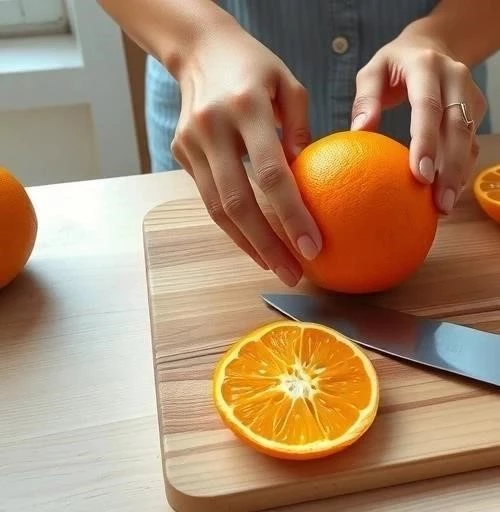
Orange slices can be served as a simple snack, arranged on a platter, or used to garnish drinks and desserts․ The best cutting method depends on how the fruit will be eaten and displayed․ A sharp knife, a stable cutting board, and a clean, ripe orange help produce neat pieces with less juice loss․
Prepare the fruit and tools
Wash the orange under cool running water and rub the peel gently to remove dirt․ Dry it with a clean towel so it does not slip while being cut․ Place it on a nonslip board․ Use a sharp chef’s knife or small serrated knife; a dull blade can crush the flesh and make the cut less controlled․ Keep fingers away from the blade’s path․
Cut rounds for a platter
- Set the orange on its side and trim a thin slice from each end․ This exposes the flesh and gives the fruit a stable base․
- Hold it firmly and cut crosswise into even rounds, usually about 6–10 mm thick․ Use smooth, steady strokes rather than pressing hard․
- Remove visible seeds with the knife tip or the tip of a clean spoon․ Arrange the rounds in a single layer or overlap them slightly on a serving plate․
Rounds keep the orange’s circular shape and are easy to pick up․ If the peel is thick or diners prefer fruit without it, cut around each round’s edge with a small knife, following the curve while leaving as much flesh intact as possible․
Make wedges for easy handling
For wedges, cut off the ends, stand the orange upright, and slice it in half from top to bottom․ Place each half cut-side down, then divide it into two or three wedges․ Adjust the size to suit the setting․ Wedges with peel are convenient to hold; a small notch through the peel can help them sit on a glass rim․
Serve peeled segments
For a tidier, peel-free presentation, remove the top and bottom, then stand the orange on the board․ Cut the peel and white pith away in strips, following the fruit’s curve․ Trim away remaining pith, then slice between the membranes to release individual segments․ Work over a bowl to catch juice and remove any seeds․
Presentation and storage
Choose one cut style for a uniform platter, or combine rounds and wedges for variety․ Arrange pieces with a little space between them and wipe juice from the plate’s rim․ Cut the orange shortly before serving; if preparing ahead, cover and refrigerate it in a clean container․ For best texture and flavor, serve chilled fruit within a day, and discard pieces that have been left at room temperature for an extended period․

8 Comments. Оставить новый
The article distinguishes between rounds, wedges, and peeled segments, making it easy to match the cutting method to how the orange will be served.
The preparation advice about washing and drying the orange and using a stable cutting board provides useful context before the cutting steps.
The suggested thickness for rounds gives readers a practical starting point while leaving room to adjust the slices for different presentations.
The article explains the difference between a simple platter presentation and a peel-free option without making the process seem complicated.
The safety reminders, including keeping fingers clear of the blade, are relevant to the step-by-step guidance.
The serving suggestions make the cutting options practical for snacks, platters, and drink garnishes.
The instructions for making wedges are straightforward and explain how the peel can make them easier to hold.
The advice to use a sharp knife and steady strokes clearly connects the choice of tools with cleaner cuts.