
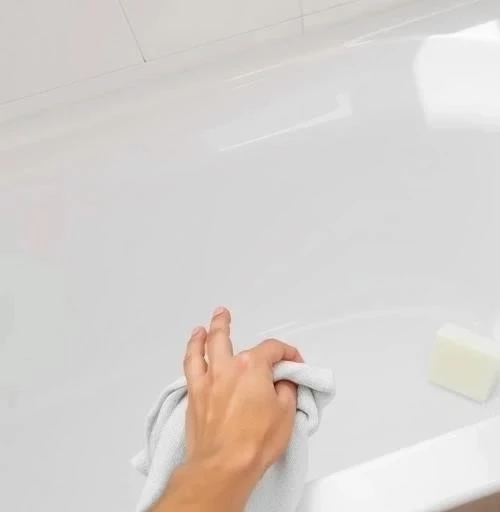
Acrylic tubs are smooth, lightweight and easy to care for, but their surface can scratch or dull if cleaned with the wrong products. For routine cleaning, use warm water, a few drops of mild dish soap and a soft microfiber cloth or non-scratch sponge. A bathroom cleaner is also suitable if its label specifically says it is safe for acrylic.
Everyday cleaning
- Rinse the tub with warm water to wash away loose dirt and residue.
- Apply diluted dish soap or an acrylic-safe cleaner with a soft cloth.
- Wipe gently, using light pressure. Rinse thoroughly so no cleaner remains.
- Dry with a clean towel to reduce water spots and soap film.
Regular, gentle cleaning is usually more effective than waiting for heavy buildup and scrubbing hard. After bathing, a quick rinse and wipe can help keep soap residue from collecting.
Soap scum and hard-water marks
For soap scum, leave a warm, damp cloth over the area for a few minutes to soften the deposit, then wipe with mild soapy water. Repeat if needed rather than using force. For mineral marks, check the tub manufacturer’s care instructions first. Some manufacturers permit a small amount of diluted white vinegar for brief contact; others advise against acidic products. If approved, test it on an inconspicuous spot, apply briefly, rinse very well, and never let it dry on the surface.
What to avoid
- Scouring powders, abrasive creams, steel wool and rough scrub pads.
- Strong solvents, including acetone, paint thinner and nail-polish remover.
- Harsh or concentrated chemicals unless the manufacturer confirms they are safe for your tub.
- Scraping with blades or sharp tools, which can leave permanent scratches.
Do not mix cleaning products. In particular, never combine bleach with ammonia, vinegar or other cleaners: dangerous fumes can result. If you use any product, follow its label, ventilate the room and rinse the tub completely.
For stains and scratches
Try a gentle acrylic-safe cleaner before treating a stain more aggressively. Avoid improvised remedies such as abrasive baking-soda paste unless the tub’s care guide specifically permits them. Deep stains, chips or scratches may need a repair kit designed for acrylic; use one according to its instructions, or consult a bathtub professional. A cleaner will not restore damaged or worn acrylic.
Best routine
Use a soft cloth, mild soap, and a thorough rinse. Check your bathtub’s manual before using vinegar, bleach or a specialist cleaner, since finishes and manufacturer recommendations vary. When unsure, test a small hidden area first. These simple precautions help preserve the tub’s shine without unnecessary scratching or chemical damage.


3 Comments. Оставить новый
Clear, practical advice for keeping an acrylic tub clean without damaging its finish. I especially appreciate the reminders to check the manufacturer’s instructions and avoid mixing cleaning products.
The gentle cleaning steps are easy to follow, and the tips for dealing with soap scum and hard-water marks are helpful. A useful guide for routine bathroom care.
A thoughtful overview that explains both what to use and what to avoid. The safety warning about bleach and other cleaners is an important addition.