
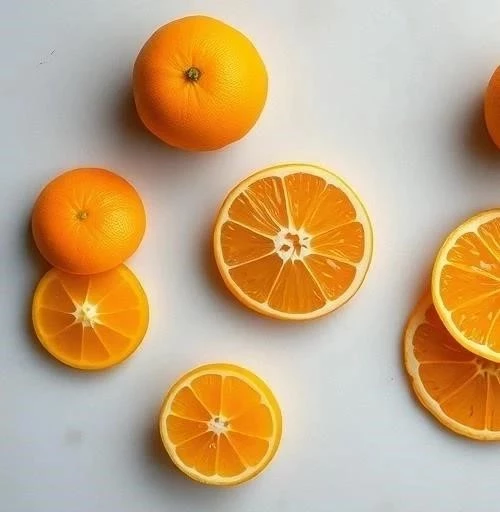
A neatly cut orange can make a fruit platter, dessert, or drink look more inviting. The best shape depends on how you plan to serve it: rounds suit garnishes, wedges are easy to eat, and peeled segments work well in salads. With a sharp knife and a few simple steps, you can make clean, attractive pieces while keeping the juice where it belongs.
Prepare the fruit and tools
Choose a firm orange with smooth, unbroken skin that feels heavy for its size. Rinse it under cool running water and dry it with a clean towel. Use a stable cutting board and a small, sharp knife for trimming or segmenting. A larger chef’s knife is useful for cutting the fruit into halves or rounds. Before you begin, make sure the board does not slide; place a damp towel underneath if needed.
Make even orange rounds
- Set the orange on its side on the board.
- Trim a very thin slice from each end so the fruit has flat surfaces and does not roll.
- Hold the orange steady and cut crosswise into slices of even thickness, usually about 5–8 mm.
- Remove any visible seeds with the tip of the knife.
Rounds are a simple choice for decorating cakes, arranging on a platter, or placing on the rim of a glass. For a polished presentation, keep the slices close in thickness and arrange them in overlapping circles. If you want to use a round as a drink garnish, make one straight cut from its center to the peel so it can sit on the glass rim.
Cut wedges for serving
For classic wedges, first cut the orange lengthwise through the stem end. Place each half cut-side down, then divide it into two or three wedges, depending on the fruit’s size. Trim away any tough central pith if it makes the wedges awkward to eat. You can also cut the halves into smaller sections for a fruit bowl. Keep the cuts steady and avoid pressing down too hard, which can crush the flesh and release juice.
Peel it for clean segments
When you want pieces without peel or excess pith, use a method often called supreming. Slice off the top and bottom of the orange to expose the flesh. Stand it upright on the board. Following the curve of the fruit, cut downward through the peel and white pith in strips, turning the orange as you go. Remove any remaining white patches with small, careful cuts.
Hold the peeled orange over a bowl to catch its juice. Look for the thin membranes that separate the sections. Slide the knife along one side of a membrane toward the center, then make a second cut along the neighboring membrane. Lift out the freed segment and repeat. Work gently: the aim is to keep each piece intact, not to remove large amounts of flesh. Save the juice and squeeze the remaining membrane into a dressing or drink.
Arrange and serve
Choose a clean, dry plate and leave a little space between pieces so their shapes remain visible. A fan of half-moons, a ring of overlapping rounds, or a small stack of wedges can look tidy without elaborate decoration. For a fruit platter, combine orange pieces with contrasting colors, such as berries or green grapes. Add delicate herbs only just before serving, as moisture can make them wilt.
Helpful tips
- Use a sharp knife: it cuts the peel cleanly and is less likely to slip.
- Wipe the blade between cuts if juice or pulp builds up.
- For a decorative edge, make small, evenly spaced notches in the peel of a round slice.
- Chill cut fruit in a covered container if it will not be served right away.
- Keep the board clean and refrigerate leftovers promptly.
For the most attractive result, match the cut to the occasion, keep pieces similar in size, and handle the fruit gently. A few careful cuts are enough to turn an ordinary orange into a bright, neat addition to the table.


1 Comment. Оставить новый
The article gives clear, practical instructions for preparing orange rounds, wedges, and peeled segments. Its safety tips and serving suggestions make the guidance useful for everyday food preparation.