
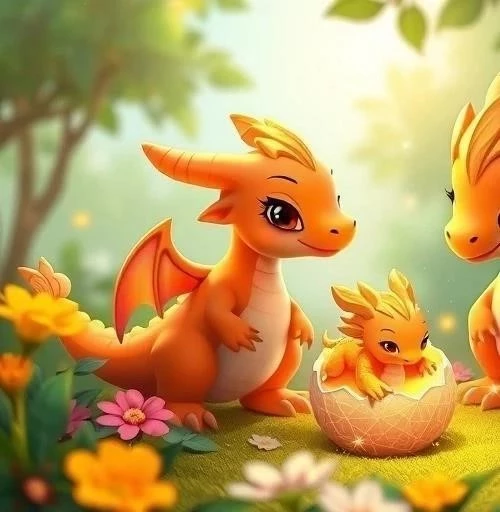
Getting a particular dragon in Dragon Mania can take patience: breeding is usually a chance-based process‚ not a guaranteed recipe. The exact availability and required parents can also vary with the game version or a limited-time event. The safest approach is to check the Orange Dragon’s entry in your in-game Dragon Book‚ then use breeding combinations that match its listed elements.
Start with the Dragon Book
Open the Dragon Book and search for “Orange.” Check the dragon’s elements‚ rarity‚ and availability. If the entry shows a breeding hint‚ treat that as your best guide. If Orange is marked as an event‚ exclusive‚ or otherwise unavailable‚ ordinary breeding may not produce it until the game brings it back.
This check matters because dragon names and breeding rules can change between releases‚ and a name that sounds like an elemental dragon is not enough to identify its recipe. Do not rely on an old list unless it matches your current version.
Try the likely element combination
If your Dragon Book identifies Orange as a Fire-and-Nature (Plant) hybrid‚ a sensible first attempt is to breed a Fire Dragon with a Nature or Plant Dragon. Use the basic dragons if you have them; higher-level parents may be convenient‚ but they do not necessarily make a specific offspring guaranteed. If the game displays a different element pair for Orange‚ follow that pair instead.
- Make sure both parent dragons are available and ready to breed.
- Open the Breeding Cave or other breeding building.
- Select the two parents whose elements match Orange’s listing.
- Start breeding‚ then wait for the timer to finish.
- Check the egg and hatch it if the result is Orange.
Breeding the matching elements only puts the desired dragon among the possible results. The parents may produce another dragon with one of those elements‚ so a failed attempt does not automatically mean you chose the wrong pair. Repeat the combination when the cave is free‚ and keep track of which parents and results you have tried.
Improve your chances and save resources
Before spending gems to hurry a timer‚ check whether the remaining time is manageable and whether you can simply wait. Gems may speed up breeding or hatching‚ but they do not turn a random result into a guaranteed Orange Dragon. Use them only if the cost is worthwhile to you.
- Keep the cave busy: Start another useful pairing while waiting‚ rather than leaving the breeding slot idle.
- Check parent eligibility: Some event dragons or special dragons may have restrictions. Confirm that each one can be used in breeding.
- Consult current in-game information: Event notices and the Dragon Book are more dependable than an old recipe copied from another version.
- Record outcomes: A short note of the parents‚ result‚ and date can prevent repeated experiments with an unsuitable pair.
If breeding does not work
If several attempts produce other dragons‚ first confirm that Orange is currently breedable and that you used the elements shown in its entry. Then consider other routes offered by the game: event rewards‚ quests‚ a shop‚ or a limited-time collection. These options depend on the current event and account progress‚ so check their requirements before using currency.
Do not assume that a long breeding timer proves the egg is Orange. Timers can overlap between different dragons‚ and the egg or result screen is the reliable confirmation. Likewise‚ avoid unofficial “guaranteed” recipes that promise certainty without matching the current game’s information.
In short
Look up Orange in the Dragon Book‚ match its listed elements‚ and breed those parents in the Breeding Cave. If your version lists Fire and Nature‚ begin with Fire plus Nature/Plant; otherwise use the elements shown in your own game. Expect possible alternative offspring‚ repeat patiently‚ and use an event or reward route if Orange is temporarily unavailable through normal breeding.



4 Comments. Оставить новый
The step-by-step breeding instructions are easy to follow, and the explanation that other dragons may result makes the process clearer. The guide could be even more useful with a note about where to find the Dragon Book entry in the game.
This guide is careful about uncertainty rather than presenting an unverified recipe as definite. Its suggestion to follow the elements shown in the current game is especially useful for players relying on information that may be out of date.
The advice to check the in-game Dragon Book first is practical because breeding requirements and availability can change. I also appreciate the distinction between a possible element combination and a guaranteed result, which helps set realistic expectations.
The article sensibly avoids promising that a particular pairing will produce the Orange Dragon. However, the supplied text ends mid-sentence, so readers may be missing the conclusion or any additional tips intended to finish the guide.