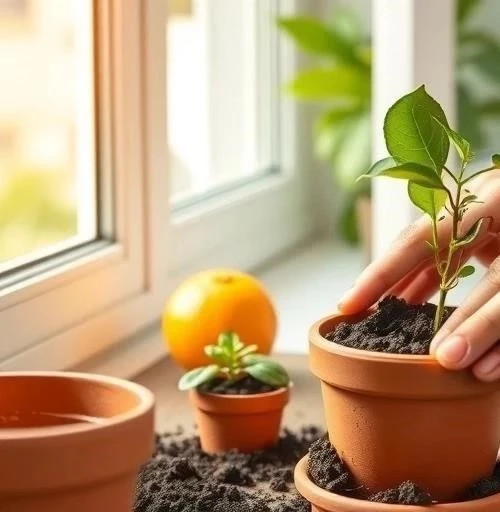
Growing an orange tree from a seed is an easy, rewarding project. A seed-grown plant may take many years to flower and produce fruit, and its oranges may differ from the parent fruit. Indoors, the tree is often grown mainly as an attractive, fragrant houseplant. For reliable fruit, choose a grafted dwarf orange tree from a nursery; the planting and care instructions below also work for seeds.
Choose and prepare the seeds
Take several fresh seeds from a ripe orange. Rinse away all pulp, then plant them promptly, since citrus seeds can lose viability as they dry. To help them sprout sooner, soak them in room-temperature water for 8–12 hours. You can carefully remove the hard outer seed coat, but this is optional and the inner seed is delicate. Planting several seeds improves the chance of getting at least one healthy seedling.
Plant them in a pot
Use a small pot with drainage holes and fresh, light potting mix. Citrus mix or a blend for indoor plants with added perlite works well. Moisten the mix, then place each seed about 1–2 cm deep. Cover it lightly and water gently so the seed stays in place. If using one pot, leave a little space between seeds; otherwise, use separate small pots.
Cover the pot loosely with a clear plastic bag or humidity dome to retain moisture, and keep it in a warm spot, ideally around 21–27°C. The mix should be damp, not waterlogged. Open the cover briefly each day for fresh air and remove it once shoots appear. Germination may take a few weeks, sometimes longer.
Give the seedling light and warmth
After sprouting, place the pot in the brightest available location. A south- or west-facing window is often suitable, though strong midday sun through glass can scorch tender leaves. Aim for at least 6–8 hours of bright light daily. If natural light is limited, use a grow light for about 10–12 hours a day. Rotate the pot occasionally so the plant grows evenly.
Keep the tree warm and protect it from cold drafts, heaters, and sudden temperature changes. Citrus grows best in bright conditions and generally appreciates moderate indoor humidity. If the air is very dry, group plants together or use a pebble tray; do not leave the pot standing in water.
Water, feed, and repot
Water when the top 2–3 cm of soil feels dry. Water thoroughly until some drains from the bottom, then empty the saucer. Frequent small splashes can leave roots too dry, while constantly wet soil can cause root rot. Reduce watering somewhat in winter, when growth slows, but do not let the root ball dry out completely.
Once the seedling is actively growing, feed it with a balanced fertilizer formulated for citrus, following the label directions. More fertilizer is not better: excess can damage roots. When roots fill the pot or emerge from its drainage holes, move the plant into a container only a few centimetres wider, using fresh well-draining mix. A pot that is too large stays wet for longer.
Keep it healthy and set realistic expectations
Check leaves regularly for scale, spider mites, and aphids. Wipe small infestations away or rinse foliage gently; use an indoor-plant treatment only as directed. Yellow leaves can have several causes, including overwatering, poor drainage, low light, or nutrient problems, so check growing conditions before adding fertilizer.
Prune lightly to remove dead or crossing branches and encourage a balanced shape. If the tree flowers indoors, pollinate blossoms by gently transferring pollen between them with a small brush. Even with excellent care, a seed-grown orange may not fruit for many years, and indoor conditions can prevent fruiting altogether. Give it patience, plenty of light, and steady care—and enjoy the glossy leaves and citrus scent along the way.