Inflating a basketball is simple, but doing it by guesswork can make the ball uncomfortable to handle and may damage it. Too little air makes the ball feel soft, bounce poorly and respond unpredictably. Too much pressure makes it excessively hard, changes its rebound and puts unnecessary strain on its seams and bladder. The right method is to follow the ball’s pressure guidance and use a gauge, rather than relying on feel alone.
Find the recommended pressure
Look for the pressure range printed near the valve or in the manufacturer’s instructions. Many standard basketballs specify roughly 7.5–8.5 psi, but recommendations vary by model and intended use. Treat the marking on your own ball as the authority: do not assume that every ball, including youth or indoor-outdoor models, requires the same pressure. If the label is missing, check the manufacturer’s website or contact its customer service before inflating.
Pressure is measured in pounds per square inch (psi); some gauges also show kilopascals (kPa). Use the unit shown in the instructions and make sure you read the correct scale. A number that looks close on the wrong scale can lead to substantial overinflation.
Prepare the pump and valve
- Use a ball pump with a pressure gauge. A hand pump gives you better control than a high-powered compressor, which can add air very quickly.
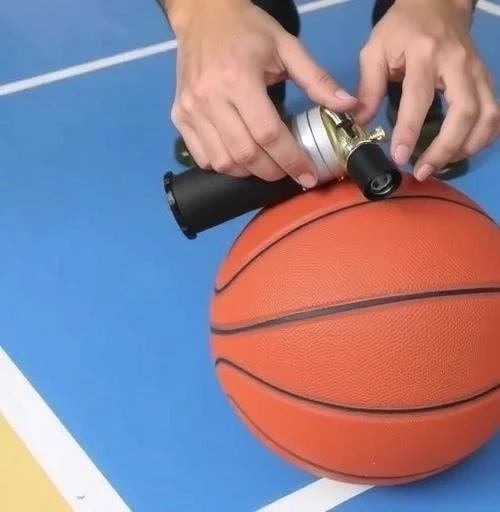
- Moisten the inflation needle with water before inserting it. This helps it pass into the valve without scraping or tearing the rubber. Do not use petroleum-based oil or grease, which may damage the valve.
- Hold the ball steady and insert the needle straight into the valve. Do not force it, twist it sharply or bend it sideways. If it will not enter easily, withdraw it, moisten it again and check that you are using a proper ball needle.
Add air gradually and check with a gauge
Pump in short strokes, pausing to check the pressure. As you approach the recommended range, use only a few strokes at a time; small additions make it easier to stop at the target. Keep the needle straight while pumping, and remove it gently when finished. If your pump’s gauge gives inconsistent readings, use a separate, reliable ball-pressure gauge rather than continuing to inflate on guesswork.
Measure the ball at room temperature when possible. Air pressure changes with temperature, so a ball that has been sitting in a cold car or hot sun may give a reading that differs from one taken indoors. Let it adjust to the conditions in which you intend to play, then check it again. Do not compensate for cold by inflating beyond the manufacturer’s stated maximum.
Use the bounce test as a check, not a substitute
A bounce test can help identify an obviously underinflated ball, but it is not precise enough to set pressure by itself: the result depends on the floor, drop height and ball design. If the manufacturer provides a test, follow its instructions. Otherwise, use the gauge for the actual pressure and treat the bounce only as a practical final check. A ball should feel firm and rebound consistently, not feel rock-hard or noticeably sluggish.
Avoid common mistakes
- Do not overinflate. A very hard ball can be unpleasant to catch, may behave differently during play and can be damaged by excess pressure.
- Do not inflate by squeezing alone. Hand feel varies, and different materials can feel different at the same pressure.
- Do not push in a dry, bent or unsuitable needle. Valve damage can cause slow leaks or make the ball difficult to inflate later.
- Do not leave a ball in extreme heat. Heat can raise internal pressure and accelerate wear; store the ball in a cool, dry place away from direct sunlight.
Recheck and maintain the ball
Basketballs gradually lose air through normal use, so check pressure before play, especially if the ball has been stored for a long time. If it repeatedly becomes soft soon after inflation, inspect the valve and surface for damage. Avoid repeatedly pumping it far above the recommended range in an attempt to fix a leak; have a damaged ball assessed or replaced.
In short: read the ball’s own pressure recommendation, moisten and carefully insert the needle, inflate in small increments, and verify the result with a gauge. This measured approach protects the valve and ball while giving you a consistent, reliable bounce on court.