
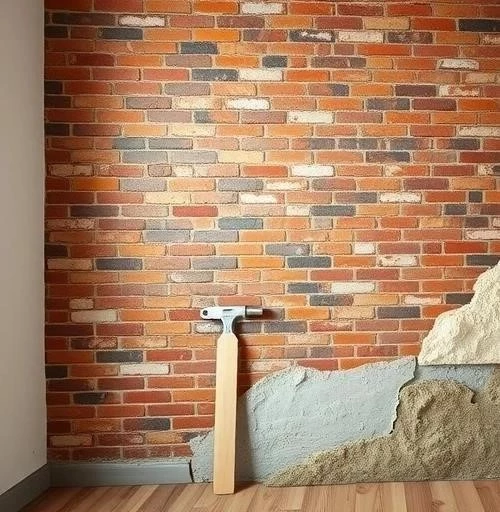
In an old apartment‚ a wall is rarely just a wall. It may conceal a century of repairs‚ shifting brickwork and plaster that sounds hollow when tapped. Wall leveling here is not a cosmetic race toward a straight line: it is a small investigation into what can safely hold the next layer. The goal is to correct uneven walls and plane deviations without asking a tired substrate to carry more than it can.
Begin beneath the surface
Preparation starts with removing loose paint and plaster‚ opening cracks in walls‚ and checking for plaster detachment. Dust‚ grease and weak patches must go; otherwise even the finest mix is only decorating a future failure. Test substrate strength by scraping and tapping. Repair sound local defects‚ then use a deep-penetrating primer on absorbent surfaces. A bonding agent can help where a smooth‚ dense base needs extra grip. This substrate preparation—and‚ where needed‚ substrate reinforcement—is the quiet work that makes the visible finish last.
Choose reinforcement for the wall‚ not by habit. Fiberglass mesh suits many stable plaster layers and helps distribute stress; plaster mesh is the general category‚ not a single solution. Metal mesh is useful on badly damaged masonry or where a thicker build-up needs mechanical support‚ but it must be fixed securely and protected from corrosion. Wall reinforcement is not a substitute for repairing a moving crack or fixing moisture first. In damp rooms‚ select moisture-resistant materials and investigate leaks before closing the surface.
Which route makes sense?
- Cement plaster‚ often based on a cement-sand mix‚ is robust and better suited to damp or demanding zones. It is heavier‚ can be less forgiving to apply‚ and usually needs more time to dry.
- Gypsum plaster is lighter‚ smooth and convenient for dry rooms. It sets faster and is easy to finish‚ but ordinary gypsum is not the choice for persistently wet areas.
- Drywall‚ also called dry plaster‚ can cover severe irregularities quickly. Frame lining hides services and avoids a thick wet coat‚ but takes away floor space and requires careful fixing in an old building.
This comparison of plaster mixes is only the beginning: the room’s humidity‚ wall material and planned finish matter just as much. For plastering with guides‚ install plaster beacons in one plane and apply the mix between them. Check the specified plaster layer thickness; an over-thick coat may crack or pull away‚ while a thin coat cannot bridge deep hollows. If the required build-up exceeds the product limits‚ reinforce it as directed or choose frame lining instead of piling on more material.
Measure twice‚ finish once
Good wall-leveling technology follows a simple order: diagnose‚ remove weak material‚ prime or bond‚ reinforce where necessary‚ set guides‚ apply and cure. Estimate material consumption from the wall area and average depth of the plane deviations‚ then add a modest allowance for waste. Repair cost depends not only on bags of plaster but also on access‚ drying time‚ reinforcement and the finish required. A cheaper mix can become expensive if it needs repeated patching.
In the old housing stock‚ the straightest wall is not always the strongest one. Let the substrate tell its story‚ choose a compatible system‚ and make each layer earn its place. Then the finished surface will do more than look level: it will stay attached‚ resist everyday knocks and give the room a fresh beginning.

3 Comments. Оставить новый
The strongest idea here is that “straight” should never come at the expense of “sound.” I appreciated the attention to substrate strength, dampness, and reinforcement choices. It turns wall leveling from a cosmetic shortcut into careful detective work—and that’s a far more satisfying way to renovate.
A practical guide with a welcome dose of patience. The comparison between gypsum, cement plaster, and drywall makes the choice feel less like a shopping decision and more like matching a coat to the weather. Preparation may be invisible, but this article makes clear that it’s where durability begins.
I like how this treats a wall as a structure with a history, not a blank canvas waiting for a quick fix. The reminder that mesh cannot solve a moving crack or hidden moisture is especially useful—sometimes the best renovation begins by asking what the wall is trying to tell us.