
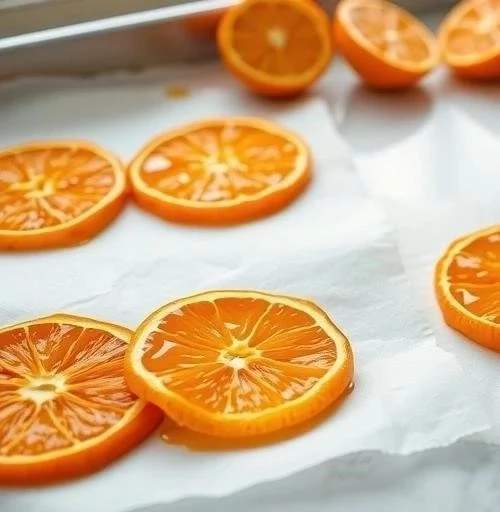
Caramelized oranges combine bright citrus flavor with a glossy coating of cooked sugar. They can be served as a simple dessert, used to decorate cakes and pastries, or paired with yogurt, ice cream, or pancakes. The method below makes tender orange slices in a light caramel sauce rather than a hard candy shell. It uses a small number of ingredients, but timing matters: hot sugar can burn quickly, so prepare the fruit and equipment before heating it.
Ingredients
- 2 medium, firm oranges, preferably unwaxed
- 100 g (½ cup) granulated sugar
- 30 ml (2 tablespoons) water
- 15 g (1 tablespoon) unsalted butter, optional
- 1 teaspoon lemon juice, optional
- A small pinch of salt, optional
This quantity makes about four servings, depending on how the oranges are cut and served. Choose fruit with smooth, unbroken skin that feels heavy for its size. If the peel will be eaten, wash the oranges thoroughly under running water and dry them. Butter gives the sauce a softer, richer finish; omit it for a dairy-free version. Lemon juice adds a little acidity and can help balance the sweetness.
Equipment
Use a sharp knife and a heavy-bottomed frying pan or saucepan, preferably with a light-colored interior so the caramel’s color is easy to see. Have a heatproof spatula, a plate or tray lined with baking paper, and oven mitts ready. A metal pan is useful because caramel can become extremely hot. Keep children and pets away from the stove while the sugar is cooking.
Prepare the oranges
- Trim a thin slice from the top and bottom of each orange so it sits steadily on the cutting board.
- Cut the fruit crosswise into even rounds, about 5–7 mm thick. Remove any visible seeds with the tip of the knife.
- For a less bitter result, cut away the peel and white pith with a small knife, following the curve of the fruit. Alternatively, leave the peel on for a more decorative slice and a stronger citrus flavor.
- Blot the cut surfaces gently with paper towel. This removes excess juice, which can make hot caramel splatter, while leaving enough moisture for the fruit to soften during cooking.
Make the caramel
Put the sugar and water in the pan and stir briefly, just until the sugar is evenly damp. Set the pan over medium heat. Once the mixture begins to boil, stop stirring; stirring at this stage can encourage sugar crystals to form on the sides of the pan. If sugar grains stick to the sides, use a clean, damp pastry brush to wash them down. Swirl the pan carefully if the color is uneven.
Watch the syrup closely as it changes from clear to pale gold and then to amber. This usually takes several minutes, but the exact time depends on the pan and the strength of the heat. Remove the pan from the heat when the caramel is a warm amber color. Do not wait for it to become very dark: darker caramel tastes more bitter and can burn in moments. If using lemon juice, add it carefully at this point. The mixture may bubble.
Cook the orange slices
- Arrange the orange rounds in the caramel in a single layer, leaving a little space between them. If the pan is too small, cook the fruit in batches.
- Return the pan to low heat. Turn each slice with tongs or a spatula so both sides are coated. The fruit will release juice, which loosens the caramel and forms a glossy sauce.
- Cook gently for about 2–3 minutes per side, turning once or twice. The slices are ready when they are warm and slightly softened but still hold their shape. Avoid vigorous boiling, which can break the fruit apart.
- For a richer sauce, take the pan off the heat and stir in the butter and salt. Tilt the pan to coat the oranges rather than stirring them roughly.
Transfer the slices to the prepared tray using a fork or tongs. If you want a saucier dessert, leave them in the pan and spoon the caramel over them. Handle the pan carefully: hot sugar sticks to skin and can cause serious burns. Do not taste the caramel until it has cooled, and do not add water to hot caramel, as sudden bubbling may cause splashes.
Serving and storage
Serve the oranges warm, at room temperature, or chilled. A spoonful of plain yogurt or crème fraîche provides contrast; vanilla ice cream makes the dish sweeter and more dessert-like. The slices also work as a topping for rice pudding, cake, crepes, or oatmeal. A little grated orange zest can strengthen the citrus aroma, while chopped nuts add crunch. Add delicate toppings just before serving so they stay fresh.
Store leftovers in a covered container in the refrigerator for up to three days. Keep the fruit with its sauce to reduce drying. Reheat gently in a small pan over low heat or in short intervals in a microwave-safe dish. The caramel may thicken as it cools; gentle warming usually loosens it. Do not leave cooked fruit at room temperature for an extended period.
Tips and variations
- Control bitterness: Removing the peel and pith gives a milder result. If keeping the peel, choose thin-skinned oranges and avoid overcooking.
- Keep slices intact: Cut them evenly, turn them gently, and use low heat once the fruit enters the pan.
- Adjust the flavor: Add a small piece of cinnamon stick while the syrup cooks, then remove it before serving. A little vanilla can be stirred in after the pan is off the heat.
- Make a larger batch: Work in batches rather than crowding the pan. Excess fruit lowers the temperature and can make the sugar cool before it coats the slices.
- Manage the sauce: If it becomes too thick, warm it slowly with a teaspoon of water or orange juice. Add liquid in small amounts and keep your hands clear of the pan.
The key steps are to prepare the oranges first, cook the sugar to a light amber color, and finish the fruit gently. With these precautions, the result should be tender citrus with a smooth, balanced caramel coating.


6 Comments. Оставить новый
The article gives practical options for adjusting the peel and using butter or lemon juice. These details make the recipe easier to adapt.
The explanation of the intended texture helps distinguish this method from making hard candy. The safety reminder is also relevant.
The ingredient quantities and serving estimate provide a helpful starting point. The equipment list is straightforward and specific.
The recipe clearly explains the ingredients, equipment, and basic preparation steps. The notes about choosing oranges and handling hot caramel are useful.
The preparation instructions are easy to follow, and the suggested slice thickness gives a useful guide for cutting the oranges evenly.
This introduction sets clear expectations for the finished dish and describes several ways to serve it. The advice to prepare equipment before heating sugar is practical.