
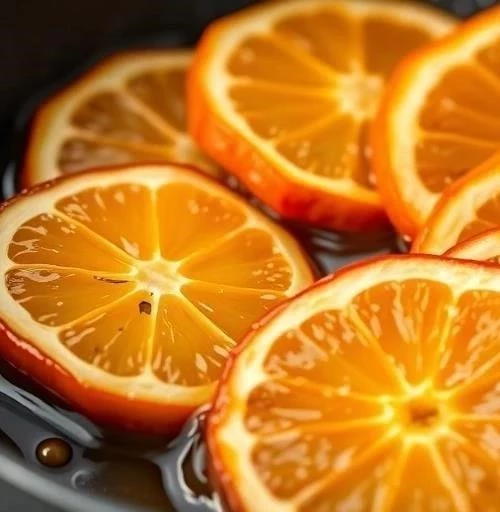
Caramelized orange is made by gently cooking orange slices or peel with sugar until the sugar melts and forms a glossy coating. The fruit becomes softer and sweeter, while its natural citrus flavor remains noticeable. It can be served with cakes, pancakes, yogurt, ice cream, or cheese. The method is simple, but careful heat control helps prevent bitterness and burnt sugar.
Ingredients and equipment
For a small batch, prepare one or two firm, unwaxed oranges, 100 g (about ½ cup) granulated sugar, and 120 ml (½ cup) water. A wide, heavy-based skillet or saucepan is useful because it distributes heat evenly. A sharp knife, a heatproof spatula, and baking parchment are also helpful. For a less sweet result, use less sugar, though the syrup will be thinner.
Prepare the oranges
Wash and dry the fruit. If the peel will remain on, scrub it thoroughly; choose unwaxed oranges when possible. Slice the fruit crosswise into rounds about 5–7 mm thick, removing any visible seeds. For pieces that are easier to serve, cut the rounds in half. Alternatively, peel the oranges and cut the peel into narrow strips. Removing some of the white pith can reduce bitterness, but a little pith helps the pieces hold their shape.
Stovetop method
- Make the syrup. Combine the sugar and water in the skillet. Heat over medium, stirring just until the sugar dissolves. Once the liquid begins to simmer, stop stirring; unnecessary stirring can encourage sugar crystals to form on the pan.
- Add the fruit. Arrange the orange slices in a single layer. Lower the heat so the syrup bubbles gently. If the pan is small, work in batches rather than crowding the fruit.
- Cook slowly. Simmer for about 20–30 minutes, turning the slices carefully once or twice. The fruit should become translucent at the edges and tender, and the syrup should look thicker. Cooking time varies with slice thickness and the amount of juice released.
- Cool the slices. Lift them out with a fork or spatula and place them on parchment, leaving space between pieces. The coating will become stickier as it cools. If desired, simmer the remaining syrup for a few minutes until it reaches a consistency that lightly coats a spoon, then drizzle it over the fruit.
Dry caramel option
For a more pronounced caramel flavor, melt sugar without water in a clean, dry skillet over medium-low heat. Tilt the pan gently as the edges liquefy; avoid stirring until most of the sugar has melted. Add the orange slices carefully, since the hot caramel may splutter, and turn them to coat. This method is faster but less forgiving: sugar can burn quickly, and the fruit may release liquid that makes the caramel seize. Reduce the heat or remove the pan briefly if the sugar darkens too fast.
Useful tips
- Use moderate heat. A rapid boil can toughen the fruit and darken the syrup before the slices soften.
- Do not touch hot caramel or taste it until it has cooled; melted sugar can cause serious burns.
- If the syrup crystallizes, add a spoonful of water and warm it gently until it dissolves. Avoid scraping crystallized sugar from the sides into the syrup.
- For extra aroma, add a cinnamon stick, a strip of lemon peel, or a small piece of fresh ginger while the fruit simmers. Remove whole spices before serving.
- For peel strips, simmer them in water for 5–10 minutes first, drain, and repeat if a milder bitterness is preferred. Then cook them in the sugar syrup until glossy and tender.
Serving and storage
Serve caramelized oranges warm or at room temperature. They pair well with plain desserts, and a little of the cooking syrup can be spooned over each portion. To store them, place the cooled fruit and syrup in a clean, covered container and refrigerate for up to five days. Rewarm gently in a pan or microwave, adding a teaspoon of water if the syrup has become very thick. Discard the fruit if it develops an unusual smell or appearance.
The finished texture depends on the intended use: shorter cooking keeps slices juicy, while longer cooking produces softer fruit and a thicker coating. Let the oranges cool before arranging them on a cake or tart, so the syrup does not run excessively. For neat slices, use a clean, sharp knife and wipe the blade between cuts.


3 Comments. Оставить новый
The explanation of how to avoid bitterness and sugar crystallization adds helpful detail to this simple recipe.
The article provides useful ingredient measurements and practical options for preparing either orange slices or peel.
The instructions are clearly organized, and the notes on heat control and slice thickness make the method easy to follow.