
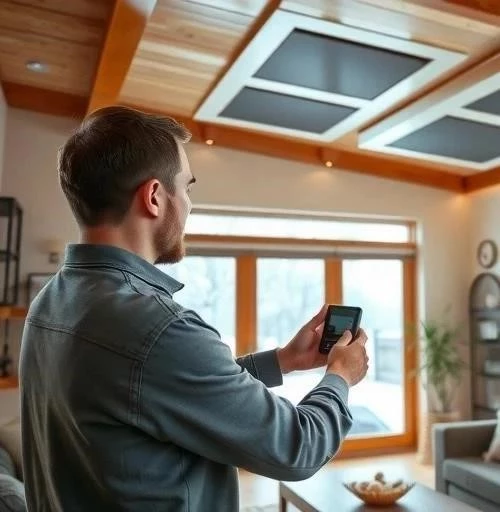
Infrared heating can provide a comfortable, controllable alternative to a conventional boiler, but it works best when designed for the building rather than selected by room area alone. Infrared heaters warm people and surfaces directly; those surfaces then help stabilize the indoor climate. For heating a country house or cottage, correct sizing, insulation, placement and controls matter more than the technology label.
Start with heat loss, not guesswork
A heat calculation should estimate each room’s heat loss through walls, roof, floor, windows, doors and ventilation. The result depends on the local design temperature, construction quality and air leakage. A simple watts-per-square-metre rule may be useful for an initial estimate, but it cannot replace a proper calculation of heat loss. Oversizing increases purchase costs and can cause short cycling; undersizing may leave rooms cold during a frost.
Calculate heater capacity from the estimated room losses, then allow for the operating pattern and any unusually exposed spaces. Improving cottage insulation, sealing drafts and upgrading glazing often reduces required capacity and energy consumption. This is why energy efficiency should be considered before equipment is bought: lower heat loss can reduce both the system size and ongoing heating expenses.
Choose equipment and plan its position
Ceiling infrared panels suit open areas because they distribute radiant heat without taking up wall space. Wall-mounted heaters can be useful in smaller rooms or where ceiling installation is impractical. An infrared heated floor, including a film heater beneath an approved floor finish, can add comfort, but it should be specified for that floor construction and not treated as a substitute for a heat-loss assessment.
Prepare a heater placement plan for every room. Keep the manufacturer’s clearances, avoid blocking the radiant surface with tall furniture, and consider windows, exterior walls and the places people actually use. A well-designed layout aims for even coverage, not simply the largest possible number of units. For open-plan spaces, zoning rooms helps avoid heating unused areas and makes comfort easier to control.
Installation, controls and safety
Infrared heating installation should follow the product instructions and local electrical regulations. Check circuit capacity and protective devices before connecting equipment; fixed wiring should be completed by a qualified electrician. Mount panels securely, keep required clearances from curtains and combustible materials, and do not cover heaters. Safe operation depends on correct installation as well as using certified equipment.
Fit a thermostat and a temperature sensor where readings represent the occupied zone, away from direct radiation, drafts and sunlight. A heating control system can schedule temperatures by room and time, while automation can lower the set point when spaces are empty. Avoid extreme setbacks if the cottage takes a long time to warm. Test each zone, sensor and control before relying on the system.
Commissioning and everyday use
After installation, compare actual room temperatures with the settings over several days, including colder weather. Adjust schedules and zones gradually; do not assume that a higher thermostat setting heats a room faster. Track electricity use alongside outdoor conditions, since one short reading cannot show seasonal performance. If energy consumption is unexpectedly high, check insulation, drafts, sensor location and operating hours before adding heaters.
The strongest case for infrared heating is its room-by-room control and direct radiant comfort, not a promise of effortless savings. A careful heat calculation, sensible equipment sizing, a considered placement plan and reliable controls help create a comfortable temperature while limiting avoidable use. With sound insulation and safe installation, the system can support a stable home microclimate and make cottage heating predictable.



9 Comments. Оставить новый
The article appropriately notes that oversizing and undersizing can both cause problems. This balanced framing is more useful than simply recommending extra capacity, especially for a property that may be used intermittently.
The advice to consider where people actually spend time makes the equipment discussion more grounded. A technically correct capacity calculation still needs thoughtful placement to make the rooms comfortable in everyday use.
I appreciate that the article treats insulation and air sealing as part of the heating decision, not as separate concerns. Reducing heat loss can improve comfort while also lowering the capacity the heaters need to provide, which may affect both the initial cost and energy use.
This is a sensible overview for homeowners beginning to compare infrared options. It avoids presenting one heater type as a universal solution and explains why building condition, room layout and installation details should guide the decision.
One of the strongest points is the warning against treating a heated floor as a replacement for a heat-loss assessment. Comfort features are valuable, but they do not remove the need to establish how much heat each space loses.
The comparison of ceiling and wall-mounted options is helpful because installation constraints differ from room to room. I would also use the placement plan to check manufacturer clearances and ensure that furniture will not obstruct the heaters.
The explanation of radiant heating is clear without suggesting that infrared equipment is automatically the right choice for every cottage. The emphasis on room-by-room planning and proper sizing helps keep the discussion practical.
The article makes a useful case for starting with heat loss rather than relying on a generic watts-per-square-metre estimate. That distinction matters because cottages vary widely in insulation, air leakage and exposure, so a rule of thumb could easily lead to an unsuitable system.
I found the focus on local winter design temperatures especially relevant. A system that seems adequate in mild weather may struggle during a cold spell, so planning around realistic conditions is important for dependable comfort.