
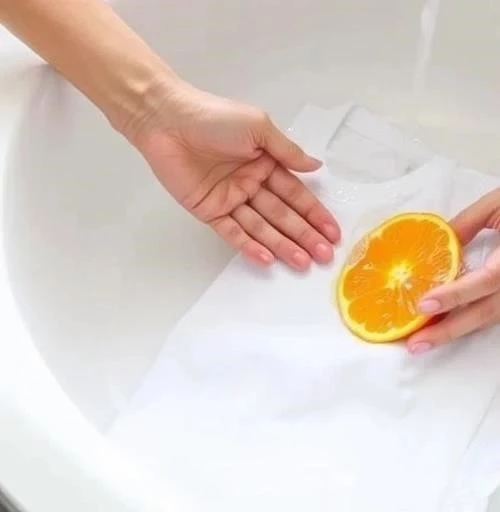
Orange juice and fruit can leave a yellow-orange mark, especially on light fabric. Treat the stain as soon as possible: heat and time may make it harder to remove. Always check the care label, and test any cleaner on an inconspicuous area first.
Fresh stain: step-by-step
- Lift off the fruit. Use a spoon or blunt knife to remove pulp. Avoid rubbing, which can push the stain deeper into the fibres.
- Rinse from the back. Hold the stained area under cool running water so the juice is flushed out through the fabric. Do not start with hot water.
- Apply detergent. Work a small amount of liquid laundry detergent into the mark gently with your fingers. Leave it for 10–15 minutes, following the product directions.
- Wash the shirt. Use the warmest water allowed by its care label and a suitable detergent. Before drying, check whether the stain has disappeared.
If the stain remains
Repeat the detergent treatment before the shirt dries. For a washable, colourfast garment, use an oxygen-based stain remover according to its label. Soak only for the stated time, then wash again. Avoid chlorine bleach unless the care label permits it; it can damage fibres or alter colour. Do not mix cleaning products.
For a white cotton T-shirt, sunlight may help fade a faint residual mark after washing, but it is not a substitute for cleaning and can affect some fabrics. Keep coloured garments out of strong direct sun if fading is a concern.
Dried or stubborn marks
Scrape away any dried pulp without scratching the fabric, then soak the affected area in cool water and detergent for 30 minutes. Gently work in more detergent and launder. If the mark persists, repeat or use a fabric-safe stain remover. Delicate materials, such as wool or silk, may need specialist care.
What to avoid
- Do not rub vigorously; this can spread the stain or damage the knit.
- Do not put the shirt in a tumble dryer or iron it until the mark is gone. Heat can set remaining colour.
- Do not use hot water at the outset, particularly on a stain containing fruit pulp.
After treatment, inspect the shirt in good light. If a trace remains, repeat the process before drying. Follow garment and product labels throughout, since fabric type, dye and stain age can affect the result.


8 Comments. Оставить новый
The article offers a straightforward approach, starting with cool water and detergent before suggesting a stain remover if needed.
The reminder to check for the stain before tumble-drying is important. Heat can make a remaining mark more difficult to remove.
It is helpful that the advice accounts for colourfastness and fabric type. Not every treatment is suitable for every garment.
The cautions about not mixing cleaning products and using bleach only when permitted make this guidance more careful and useful.
The advice to rinse the stain from the back of the fabric is a useful detail. It explains how to flush out the juice without pushing it further into the fibres.
This is a clear, practical guide. Checking the care label and testing a cleaner first are sensible precautions, especially for garments made from delicate materials.
The guidance is concise and practical, particularly the advice to avoid rubbing and to repeat treatment before the fabric dries.
I appreciate that the article distinguishes between fresh and dried stains. The suggested steps are easy to follow and avoid unnecessarily harsh treatment.