
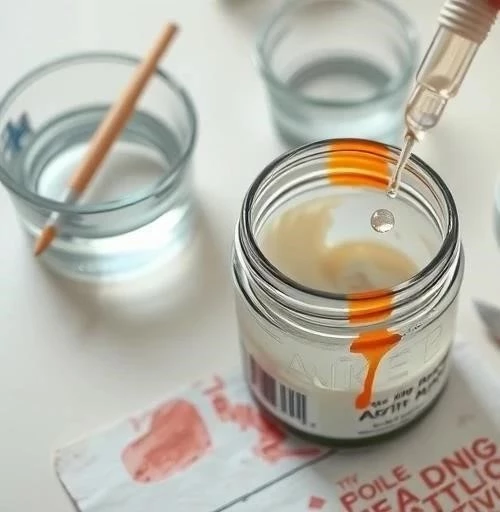
Acrylic paint is water-based, so water is usually the first choice when paint has become thick. But there is an important distinction: paint that has thickened or formed a soft skin may be recoverable; paint that has dried into a hard, rubbery lump has generally cured and cannot be restored to its original working quality. The right approach depends on how far the drying process has gone.
Check the paint before you begin
Stir the paint gently with a clean stick. If it moves, feels creamy, or has only a few soft lumps, try reconditioning it. If the contents are solid throughout, crumbly, or have separated into an unusable mass, discard them. Do not force hard pieces through a sieve and use them in detailed work: they can leave grains, streaks, or weak patches. For a valuable painting or a finish that must last, fresh paint is the safer choice.
Method 1: Add water to slightly thickened paint
Use clean water, preferably distilled or filtered if your tap water is very hard. Add just a few drops at a time, then mix thoroughly and scrape the sides and bottom of the container. Wait a minute for the water to blend before deciding whether to add more. Repeat gradually until the paint flows and brushes smoothly.
Avoid pouring in a large amount at once. Too much water can make the paint runny, reduce its coverage, and weaken the binder that helps it adhere. It may also change the finish or make the color look less even. If you need a very fluid consistency, use a product designed for that purpose rather than endlessly diluting the paint.
Method 2: Use acrylic medium or paint thinner
An acrylic medium is often the best option when you want to loosen paint while preserving its body, color strength, and binding properties. Choose a medium compatible with the paint and follow its label. Add a small amount, mix well, and test the result on scrap paper or a spare surface. A thinner made specifically for acrylic paint can also help with paint that is still soft but unusually thick.
Do not confuse a thinner with a remover. Many products sold as removers or solvents are intended to strip cured paint from tools or surfaces; they are not suitable for restoring paint in a jar. Check the label before use, and never mix products simply because both are called “solvents.”
What about alcohol?
Isopropyl alcohol may soften some acrylic residues, but it can also disrupt the paint’s binder, cause clumping, or change how the paint performs. It is not the preferred way to revive a usable batch. Avoid adding rubbing alcohol or household cleaners to paint intended for artwork, decoration, or a durable finish. If you experiment with a product, test a tiny amount separately first and work with ventilation, following its safety instructions.
Step-by-step recovery
- Remove any dry skin from the surface; do not stir it into the paint.
- Transfer a small amount to a clean palette or cup, so the whole container is not at risk.
- Add a few drops of water or compatible acrylic medium and mix slowly.
- Continue in small additions until the paint is smooth. Stop if it separates, turns grainy, or refuses to blend.
- Test its brushability, coverage, and adhesion on a spare surface before using it on your project.
Prevent paint from drying out again
Close the lid tightly after each use and wipe paint from the rim so the seal can work. Keep containers away from heat and direct sunlight. For small amounts, use a palette with a lid; during a painting session, cover paint you are not using. Never return diluted or contaminated paint to the original container. If the paint repeatedly dries out, transfer it to a clean, airtight container and label it.
In short: use water for paint that is only slightly thickened, and an acrylic medium or paint-specific thinner when you need more control. Add either gradually. Once acrylic paint has fully hardened, it generally cannot be made reliably usable again—replacing it is better than risking a poor result.

4 Comments. Оставить новый
Clear and useful guidance for deciding whether acrylic paint can be recovered. The suggestion to use a compatible medium when preserving the paint’s body matters is particularly helpful.
I appreciate the recommendation to test the paint on a spare surface before using it on a project. That small step can help avoid an unpleasant surprise.
Good practical advice about adding water gradually and mixing thoroughly. The warning that too much water can weaken coverage and adhesion is an important point.
The distinction between paint that has merely thickened and paint that has fully cured is especially helpful. It makes it clear when adding water might work and when it is better to start with fresh paint.