
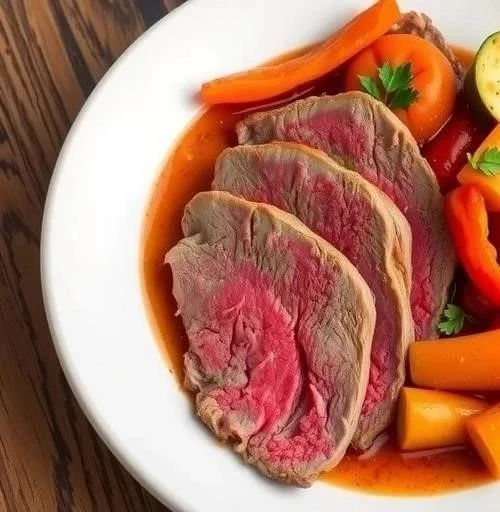
A good beef roast should be more than impressive on the table: it should be tender, flavorful and practical enough for a relaxed home dinner. Slow oven cooking with vegetables and tomato sauce delivers all three. The beef stays moist, while the vegetables absorb the savory juices, making this a satisfying one-pan meal rather than a dry slice of roasted meat beside an unrelated sauce.
Ingredients
- 1.2 kg beef tenderloin or another well-marbled roasting cut
- 3 tomatoes, 1 bell pepper, 2 carrots and 1 onion
- 3 garlic cloves, 2 tbsp tomato paste and 250 ml meat broth
- 1 tbsp oil, salt, black pepper, meat spices and aromatic herbs
Preparation and cooking
- Take the beef out of the refrigerator about 30 minutes before cooking. Pat it dry and season generously with salt, pepper and meat spices. Browning the joint in a hot pan is worth the extra step: it builds a rich crust and deeper flavor, although it does not “seal in” the juices.
- Cut the onion, carrots, bell pepper and tomatoes into generous pieces. Soften the onion and carrots in the same pan, then stir in the garlic and tomato paste. Add the tomatoes, bell pepper, meat broth and aromatic herbs. The broth loosens the browned bits, while tomato paste gives the sauce body and concentrated savoriness;
- Set the beef in a roasting dish and pour the vegetables and tomato mixture around it. Cover loosely and cook in an oven preheated to 160°C (320°F). For a 1.2 kg joint, allow about 70–90 minutes for medium doneness, but treat cooking time as a guide, not a guarantee: shape, starting temperature and oven accuracy all matter. A meat thermometer is more reliable; aim for about 55–60°C (131–140°F) at the center, then rest the roast before slicing.
Why this method works
This recipe combines roast beef with the comfort of braised beef. The relatively gentle roasting temperature helps keep the meat tender, while the covered vegetables create a moist environment and gradually turn into a rustic vegetable stew. In other words, the dish gains flavor from both the beef and its sauce. If you prefer well-done beef, cook it longer, but expect a firmer result; no sauce can entirely undo overcooking.
Serving and useful tips
Rest the beef for 10–15 minutes before carving across the grain. Spoon the tomatoes, carrots and bell pepper over each portion, and serve with the tomato sauce from the dish. Mashed potatoes, rice or crusty bread make an excellent side dish for roast beef because each catches the sauce. For extra depth, simmer the sauce briefly after removing the meat and adjust the seasoning only at the end.
The result is juicy beef with vegetables: a dependable home dinner that feels generous without demanding complicated technique. Use a roasting cut rather than lean tenderloin if you want a more forgiving result, and check doneness instead of relying on the clock alone. That small change makes this roast beef recipe easier to repeat—and far more likely to produce tender meat every time.



7 Comments. Оставить новый
The suggestion to brown the meat first is practical, and the clarification that browning adds flavor rather than sealing in juices is a helpful bit of cooking science.
I like that the vegetables cook alongside the beef rather than being treated as a separate side dish. They should pick up plenty of flavor from the broth and browned ingredients.
Resting the roast before slicing is an important detail. It gives the juices time to settle and should make the beef easier to carve cleanly.
The recipe gives a good balance between clear directions and flexibility. Mentioning that oven accuracy affects cooking time helps readers avoid relying too heavily on the clock.
The tomato paste, broth and herbs promise a flavorful sauce without requiring complicated ingredients. The recipe would be even more helpful with guidance on adjusting the sauce thickness at the end.
This sounds like a comforting one-pan meal. I would appreciate a note on whether the vegetables should be cut into similar-sized pieces, since that can help them cook more evenly.
The explanation that cooking time is only a guide is especially useful. A thermometer makes the result more predictable, since roasting cuts can vary in shape and thickness.