
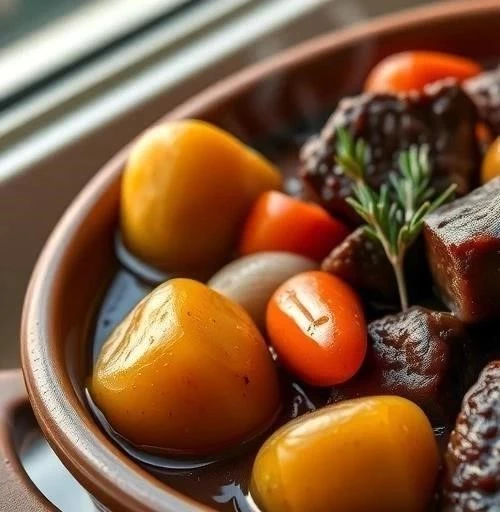
Slow braising earns its place at dinner: steady heat lets flavors deepen and fibers soften‚ so each bite feels richer and more satisfying than a fast meal at home.
Choose beef‚ potatoes‚ and vegetables—onion‚ carrot‚ and garlic—because quality ingredients are the foundation of a satisfying beef recipe and a balanced meat stew.
Choose well-marbled beef‚ firm potatoes‚ and fresh vegetables‚ because trusted ingredients determine the stew’s flavor‚ texture‚ and balance. Choose beef with fine marbling‚ a fresh smell‚ and a rich red color; these signs suggest good quality without relying on a costly cut. For potatoes‚ pick evenly sized‚ unblemished pieces with tight skins‚ since they provide a dependable‚ hearty counterpart and help each serving feel complete. Pair them with a firm onion‚ a crisp carrot‚ and plump garlic cloves; fresh produce contributes sweetness‚ gentle earthiness‚ and a savory aroma‚ while varied colors make the meal more inviting. Avoid limp potatoes‚ bruised carrots‚ soft onions‚ or garlic with dry‚ dark spots‚ because damaged produce can weaken both flavor and texture before the ingredients reach the table. That care is worth the small extra effort.
Brown the beef in a skillet before adding red wine‚ tomato paste‚ beef broth‚ spices‚ bay leaf‚ rosemary‚ and thyme; this step builds a richer wine sauce and more aromatic dish.
Pat the beef dry‚ then brown it in a hot skillet in small batches; crowding traps steam‚ while a deep crust adds savory flavor in the pan. Once browned‚ set it aside and loosen the skillet’s flavorful fond with a splash of red wine‚ scraping up every browned bit. Stir in tomato paste and let it darken briefly‚ because this concentrates its sweetness and rounds the sauce. Add beef broth gradually‚ then season with measured spices‚ a bay leaf‚ rosemary‚ and thyme. These additions work best in balance: wine brings acidity‚ broth gives body‚ tomato paste adds depth‚ and herbs lend fragrance without masking the meat. Keep the liquid savory rather than salty‚ since it will reduce as the dish cooks. This sequence builds a fuller‚ more aromatic wine sauce from the pan’s browned residue‚ making each spoonful taste deliberate instead of flat.
Braise the meat in a Dutch oven or kazan on the stovetop or in the oven‚ because gentle‚ patient cooking is what turns meat in wine into juicy meat and tender beef.
Set the covered Dutch oven or kazan over low heat‚ or place it in a moderate oven; either method can work‚ provided the liquid barely simmers. A fierce boil may tighten the beef and drive off moisture‚ whereas gentle heat gradually softens connective tissue and keeps the texture succulent. Keep the lid closed so steam returns to the pot‚ and check occasionally that the sauce is quietly bubbling rather than aggressively rolling. If the surface looks dry‚ lower the heat; stable‚ moist conditions matter more than constant stirring. Allow enough time for the meat to become fork-tender‚ since rushing this stage can leave it chewy even when the outside seems cooked. The payoff is substantial: patient braising yields tender beef‚ a cohesive sauce‚ and a comforting centerpiece‚ with little effort once the pot is set. Low heat keeps it moist.
Add the potatoes at the right stage and follow a step-by-step recipe‚ since well-timed cooking gives you flavorful beef with potatoes‚ a hearty potato side dish‚ and a reliable estimate of the total cooking time.
Add potatoes only after the beef is nearly fork-tender; this timing matters because early-added pieces can collapse‚ while late ones may remain firm. Cut them into similar-sized chunks so they soften evenly‚ then nestle them into the sauce and keep the pot covered. Check after about 25 minutes with a knife: it should slide through easily‚ yet the potatoes should hold their shape. This simple checkpoint makes the meal dependable rather than guesswork. For a step-by-step recipe‚ count the initial braising and potato stage separately‚ and allow extra time for larger pieces or a lower simmer. The total cooking time varies with the cut and pot‚ so tenderness—not the clock alone—should guide serving. The result is flavorful beef with potatoes and a hearty potato side dish‚ ready together without overcooked vegetables. A brief rest helps timing! This makes the timing easier!



3 Comments. Оставить новый
The explanation of browning the beef in batches is especially useful, since it clarifies how to build flavor without steaming the meat. The guidance on scraping up the browned bits also gives readers a practical reason to deglaze the pan.
The article makes a convincing case that a good stew depends on more than the cooking time. Its focus on fresh vegetables and suitable beef helps readers understand how ingredient quality affects the final flavor and texture.
The article thoughtfully describes how wine, broth, tomato paste, and herbs contribute different qualities to the sauce. That balanced approach is helpful because it encourages readers to build depth without letting any one ingredient overwhelm the stew.