
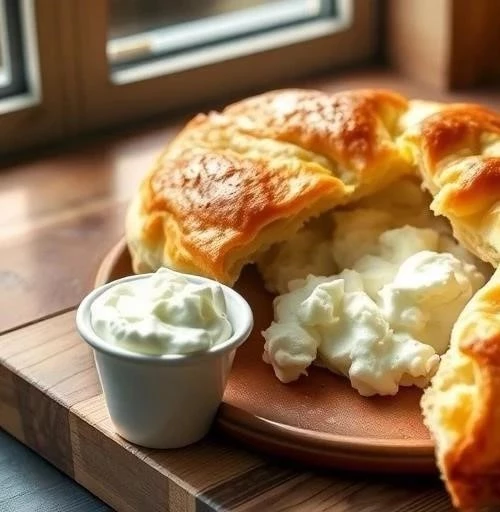
Khachapuri with Cottage Cheese: Why This Recipe Deserves a Place in Your Home Baking
Khachapuri with cottage cheese earns a place in home baking: its gentle flavor makes this Georgian classic comforting and worthwhile. A balanced recipe rewards care‚ indeed.
Choose the Dough to Match Your Goal: Compare дрожжевое тесто and бездрожжевое тесто‚ then explain how кефир and мука affect the texture of тесто для хачапури and why a careful замес теста helps create воздушное тесто.
For khachapuri‚ choose dough according to the texture and time you want: дрожжевое тесто needs patience‚ while бездрожжевое тесто is quicker and gives a more compact bite. Neither is automatically better; the right choice depends on whether you value a light‚ risen crumb or convenience. Кефир adds moisture and gentle tang‚ but too much can make the dough sticky‚ so add it gradually. Мука determines structure: use enough to form a soft mass‚ not so much that it turns tough. A careful замес теста develops elasticity and distributes moisture evenly; stop when the dough feels smooth and supple rather than dense. This restraint matters because воздушное тесто comes from balanced hydration and proper handling‚ not from piling in extra flour. For reliable тесто для хачапури‚ measure consistently and allow the dough to rest before shaping. This choice keeps the dough soft and easy to handle gently.
Build a Balanced‚ Juicy Filling: Show how начинка из творога and творожная начинка can be combined with яйца‚ сулугуни‚ твердый сыр‚ and сливочное масло; argue that the right proportions make хачапури с творогом and нежные хачапури both flavorful and tender.
A balanced начинка из творога should taste creamy‚ not watery; drain the curds first‚ because excess moisture weakens the texture. For a smooth творожная начинка‚ combine 250 g cottage cheese with one яйцо‚ then add 80 g grated сулугуни and 40 g твердый сыр. This pairing is reasoned‚ not arbitrary: сулугуни brings salt and softness‚ while твердый сыр adds a clear savory note. Stir in 15 g softened сливочное масло for richness‚ but avoid adding more‚ or the filling may feel heavy. Taste before seasoning‚ since both cheeses contribute salt. Keep the mixture moist enough to remain tender‚ yet firm enough to hold its shape. These proportions let хачапури с творогом stay flavorful without masking the dairy‚ and make нежные хачапури tender rather than greasy. In short‚ measured ingredients—not sheer quantity—create a juicy‚ balanced filling with a clean‚ delicate finish‚ for sound reasons.
Shape the Khachapuri with Purpose: Give a пошаговый рецепт for формирование хачапури‚ explaining how to keep the сочная начинка inside and how хачапури по-аджарски and хачапури по-мегрельски offer distinct shapes and serving styles within грузинская кухня.
This пошаговый рецепт treats формирование хачапури as a way to protect the сочная начинка‚ not merely decorate the pie. Divide the dough into equal portions‚ flatten each into a thick round‚ and place filling in the center‚ leaving a clear border. Lift the edges over the filling‚ pinch them firmly together‚ then turn the parcel seam-side down. Press gently into an even oval; avoid stretching thin spots‚ because they can split and leak. For хачапури по-аджарски‚ shape an open boat and leave the center visible; this form suits sharing and a soft‚ spoonable middle. Хачапури по-мегрельски is closed and round‚ with its filling enclosed‚ giving a neater hand-held portion. These forms show how грузинская кухня adapts one idea to different occasions. Seal carefully and keep the filling centered: sound shaping preserves juiciness and makes every portion easier to serve. It protects the filling.
Bake for Texture‚ Not Just Color: Describe выпечка в духовке and the appropriate температура выпекания‚ arguing that careful timing—not simply higher heat—is what produces a золотистая корочка without drying out the filling.
Reliable выпечка в духовке depends on steady heat and a timed check‚ not on turning the dial to its maximum. Preheat the oven fully‚ then set the температура выпекания to 200 °C. For a cottage-cheese khachapuri‚ 200°C is a sensible starting point: it browns the surface while giving the center time to warm. Place the pie on the middle rack and begin checking near the end of the expected bake; ovens differ‚ so appearance and firmness matter more than a rigid minute count. A золотистая корочка signals browning‚ but it does not prove the filling is still moist. If the top colors too quickly‚ lower the heat slightly rather than extending exposure at high temperature. Remove the khachapuri when the crust is evenly colored and the center feels set but supple‚ then let it rest briefly. This short pause helps the texture settle; careful timing‚ rather than excess heat‚ preserves tenderness. Indeed.


2 Comments. Оставить новый
The article makes a persuasive case for choosing dough according to the desired texture and available time. Its explanations of how hydration, flour, and kneading affect the result are practical, and the suggested filling proportions make the advice concrete. The mix of English and Russian culinary terms may be useful to some readers, though brief translations would make the guidance more accessible to a broader audience.
The emphasis on controlling moisture in the cottage-cheese filling is especially helpful, since it connects ingredient preparation to the finished texture rather than offering instructions without explanation. The article also usefully balances flavor and tenderness when discussing the cheeses. However, the supplied text ends abruptly during a sentence, so the recipe’s remaining steps and overall conclusion are not available to assess.