
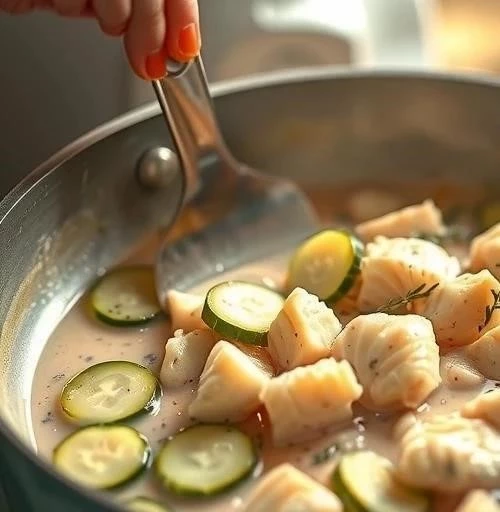
A fish soufflé need not be baked in a tall dish to feel light. This gently stewed version uses whipped egg whites for a tender, airy crumb, while a lively sauce of salted cucumbers and thyme keeps mild pollock from tasting bland. The method is worth choosing over a hot, fast bake: poaching in a covered pan cooks the delicate fish evenly and helps prevent a dry, rubbery result. It is not a classic oven soufflé, but a practical, moist interpretation of the same idea.
Ingredients
- 400 g skinless pollock fillet, checked carefully for bones
- 2 eggs, separated
- 2 tbsp cream or milk, plus 1 tbsp butter
- 1 small onion, finely chopped
- 1–2 salted cucumbers, diced
- 150 ml light fish or vegetable stock
- 1 tsp chopped fresh thyme, or ½ tsp dried
- 1 tsp flour, salt, and black pepper
- Butter for greasing; dill or parsley to finish

Method
- Cut the pollock into pieces and mince it finely, or pulse briefly in a food processor. Stir in the cream, egg yolks, a pinch of pepper, and only a little salt. Salted cucumbers and stock already bring plenty of seasoning, so taste the mixture before adding more.
- Whisk the egg whites to soft peaks. Fold them into the fish mixture in two additions, using a spatula and light strokes. This step matters: beating the whites firmly but not dry, then folding gently, creates a delicate texture rather than a dense fish cake.
- Grease four small heatproof ramekins and divide the mixture between them. Set them in a deep lidded pan. Pour hot water around the dishes until it reaches halfway up their sides. Cover and cook over very low heat for 20–25 minutes. Keep the water at a quiet simmer; a rolling boil can make the soufflés tough. They are ready when set in the centre.
- Meanwhile, melt the butter in a small saucepan and soften the onion for 3–4 minutes. Stir in the flour, then gradually add the stock, whisking to avoid lumps. Add the diced cucumbers and thyme; simmer gently for 5 minutes. The sauce should be spoonable, not thick enough to overwhelm the fish. Adjust pepper and, if needed, add a splash of water.

Serving and practical tips
Turn the soufflés out carefully, or serve them in their ramekins, with the warm cucumber sauce alongside rather than poured over the tops. A little dill, boiled potatoes, or plain rice makes a balanced meal. The sharp, salty cucumbers provide contrast, while thyme adds a subtle savoury fragrance; neither should dominate the mild pollock.
For the best result, use fresh or fully thawed fish and drain it well. Excess water weakens the mixture and can leave it loose. Do not open the lid repeatedly, since sudden cooling may make the soufflés sink. They will naturally settle a little after cooking, but should remain soft and moist. Serve immediately: this version is designed for tenderness, not for holding its height.
9 Comments. Оставить новый
The recipe seems thoughtfully adapted for home cooking: ramekins in a lidded pan make the water bath manageable, and the low heat reduces the risk of tough fish. Clear serving guidance would make it even more complete.
Using salted cucumbers with thyme is an appealing way to give mild pollock more character. The creamy, airy soufflé and tangy sauce should complement each other without requiring complicated ingredients.
The covered water-bath method is a sensible choice for delicate pollock. Gentle heat should help the mixture set without turning it dry, and the explanation about keeping the water at a quiet simmer makes the technique easy to follow.
The sauce sounds like the strongest feature: onion, stock, thyme, and salted cucumber should bring enough depth to keep the fish from tasting bland. Gradually whisking in the stock is also a sensible tip for avoiding lumps.
I appreciate that the method distinguishes this from a traditional oven-baked soufflé. That expectation-setting is useful, and the emphasis on poaching explains why the result should be moist and tender.
The guidance on folding the egg whites in gently is helpful because it explains how to achieve a lighter texture rather than simply listing a step. This seems like a good recipe for someone who wants a delicate fish dish without using an oven.
I like the balance between the mild fish and the sharp, salty cucumber sauce. The advice to add salt cautiously is especially useful, since both the cucumbers and stock can vary in saltiness.
This looks like a gentle, well-reasoned approach to a fish soufflé. The soft-peak egg whites and careful folding should give it lift, while the suggested salt adjustment accounts for ingredients that are naturally quite salty.
The recipe offers practical details that can prevent common problems, particularly checking the fish for bones and avoiding a rolling boil. I would appreciate a doneness cue beyond “set in the centre,” but the overall method sounds straightforward.