
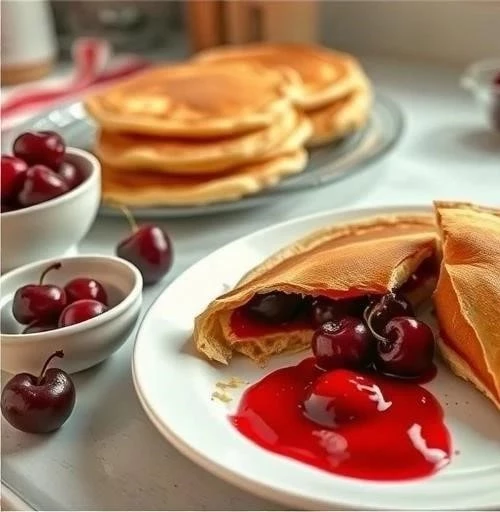
The Cherry-Pancake Case File: A Foolproof “блины с вишней” Blueprint — “рецепт блинов с вишней,” “тонкие блины,” “тесто для блинов,” “пропорции ингредиентов,” and “как приготовить блины”
Cherry-pancake clue: weigh flour, milk, eggs, sugar; whisk a smooth batter, rest it now. Balance makes thin pancakes tender, not timid.
The Batter Lab: Solve “тесто получается комками,” “слишком жидкое тесто,” and “слишком густое тесто” to find the “правильная консистенция теста”—and discover “почему рвутся блины” or “блины не пропекаются”
In the batter lab, lumps are tiny locked doors: whisk flour with a little milk first, then stream in the rest. “тесто получается комками,” sieve and rest it for ten minutes. “Слишком жидкое тесто” needs a spoonful of flour; “слишком густое тесто” needs milk, added gradually. Aim for “правильная консистенция теста”: it should fall from the whisk in a smooth ribbon, like satin, not a waterfall or paste. A measured egg and calm mixing help explain “почему рвутся блины”; give the batter a short rest so flour hydrates. If “блины не пропекаются,” the mixture may be too thick to cook through evenly. Keep a tiny kitchen notebook: one adjustment at a time turns guesswork into a repeatable formula. Tweak and note.
The Pan’s Hot-Spot Mystery: Track “температура сковороды” and the “разогретая сковорода,” prevent “блины прилипают к сковороде,” and master “переворачивание блинов” while avoiding “ошибки при приготовлении блинов”
Treat the pan like a tiny weather station: “температура сковороды” should be steady, not scorching. Let the “разогретая сковорода” warm over medium heat, then test with a drop of water; a lively bead signals readiness. A cold surface makes “блины прилипают к сковороде,” while fierce heat browns the outside before the center sets. Pour, tilt, and wait for the edge to look dry and lift easily. For “переворачивание блинов,” loosen the rim, slide a thin spatula beneath, then flip with one confident wrist. If the pancake tears, sticks, or darkens too fast, adjust the heat before the next pour. These small clues expose “ошибки при приготовлении блинов” without blaming the cook: the pan is simply reporting its mood.
The Cherry Alchemy: Turn “сочная вишня,” “замороженная вишня,” or “свежая вишня” into “вишнёвая начинка” and “начинка из вишни”; tame “вишнёвый сок” with “крахмал для начинки” for a “густая начинка”
Build a small “сочная вишня” laboratory: “свежая вишня” needs a brief simmer; “замороженная вишня” should thaw over a sieve. Save the ruby “вишнёвый сок”; excess liquid can make “начинка из вишни” runny. Stir “крахмал для начинки” into cold juice first, then pour it into gently bubbling fruit, whisking until glossy and spoon-coating. Cool completely: warmth can loosen even a “густая начинка.” If it turns pasty, add a splash of reserved juice; if thin, simmer a little longer. Think of starch as a tiny stage curtain: it gathers berry juice without hiding its bright, tart voice. A teaspoon at a time is the alchemist’s rule: patience preserves whole berries and keeps the filling from flooding the pancake. Now.
The Grand Flip and Finale: Show “как завернуть начинку в блин,” reinvent “сладкие блины” and “блины с ягодами,” then finish with a playful “подача блинов с вишней”
To wrap the filling, place a modest spoonful at the center; too much turns a neat parcel into a berry jailbreak. Fold the sides inward, roll from the bottom, and set the seam underneath. For a playful twist, fold each pancake into a triangle, then dust with sugar like fresh snow on a red rooftop. These “sweet pancakes” welcome citrus zest, toasted nuts, or yogurt; “berry pancakes” can wear a few sliced berries as bright confetti. If a parcel opens, serve it seam-side down and call it a deliberate deconstructed dessert. Finish with a “cherry-pancake presentation” worthy of applause: stack them like folded letters, drizzle a thin ribbon of berry syrup, add mint, and place one cherry on top—the edible wax seal.


7 Comments. Оставить новый
A useful blend of precision and playfulness. I appreciate that the advice favors gradual adjustments; the kitchen feels less like a test and more like a place to experiment.
I love how this turns pancake troubleshooting into a detective story. The batter ribbon test is especially vivid—suddenly “consistency” feels something you can actually see, not just guess.
The strongest advice is to change one thing at a time. That small principle can rescue a whole morning of cooking—and might be useful well beyond pancakes.
The tiny kitchen notebook is the quiet star here. It makes every imperfect pancake useful evidence, which is a much kinder—and cleverer—way to learn than chasing one flawless batch.
“Tiny locked doors” is a delightful image for flour lumps. The article gives practical fixes without making the cook feel as if one clump has ruined the whole investigation.
The pan-as-weather-station idea made me smile. It turns heat control into a small ritual of observation, and that confident flip sounds far less intimidating after the edge has lifted.
This has the energy of a culinary field guide, complete with clues, tests, and a notebook. It makes the humble pancake feel like a delicious little science project.