
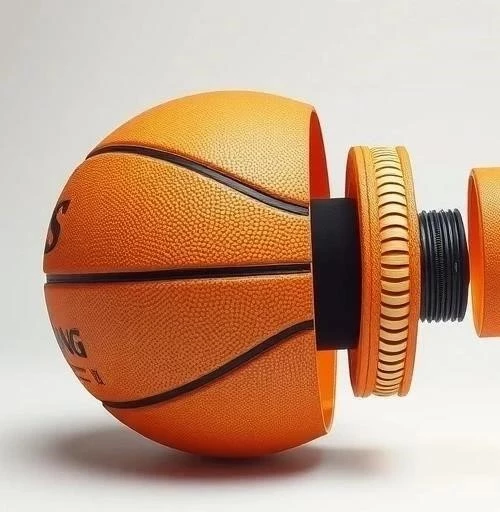
A basketball is a layered, air-filled ball designed to bounce predictably, provide a secure grip, and withstand repeated impact. Its exact materials depend on the model and intended playing surface. Most modern balls have three main components: an outer cover, a reinforced inner structure, and an inflatable bladder. These parts work together, but they serve different purposes;
The outer cover
The cover is the visible surface that players touch. It is commonly made from rubber, synthetic composite material, or genuine leather. Each option has different characteristics, and no single cover is ideal for every setting.
- Rubber: Durable and relatively affordable, rubber is often used on outdoor balls. Its surface can provide a pronounced grip, while the material generally tolerates rough courts better than leather.
- Composite material: Many indoor and indoor-outdoor balls use synthetic materials, often based on polyurethane or other polymers. A composite cover can be designed to feel soft and provide grip without requiring the break-in period associated with some leather balls.
- Genuine leather: Traditional high-level indoor balls may use leather. It can develop a more comfortable feel with use, but it is usually intended for clean indoor courts and can wear faster on abrasive outdoor surfaces.
The cover is usually formed into panels, with channels between them. These channels help players orient their hands and can support ball control. Small bumps or pebbled textures increase the surface’s contact with the fingers, helping provide grip. The design and depth of the channels vary by model.
Layers beneath the surface
Under the cover, manufacturers commonly place one or more layers of fabric or fiber reinforcement. Nylon is often used, sometimes together with polyester or other fibers. The winding or layered reinforcement helps the ball retain its shape, limits unwanted stretching, and supports consistent performance as the ball is inflated and used.
At the center is an inflatable bladder, generally made of butyl rubber or latex. The bladder holds the air that gives the ball its bounce. Butyl tends to retain air for longer, so it is widely used in balls designed for regular play. Latex can provide a responsive feel, but it may lose air more quickly and need more frequent inflation. Construction varies among manufacturers and models.
How the parts work together
When a ball strikes the floor, its air-filled bladder compresses and then expands. That rebound produces the bounce. The reinforced layers help the ball recover its shape, while the outer cover provides the grip and durability needed for handling and play. Inflation pressure, ball size, construction, and temperature can all affect how a basketball feels and bounces.
A basketball is not necessarily made from one material throughout. A rubber ball may still have a separate bladder and reinforcement, just as a leather-covered model can contain synthetic or textile layers inside. The material printed on a product label usually describes the cover rather than every component.
Choosing and caring for a ball
For outdoor use, a durable rubber or outdoor-rated composite cover is generally a practical choice. For indoor courts, a composite or leather model may offer a suitable feel, provided it is intended for that surface. Players should follow the maker’s guidance on court use and inflation; overinflation can strain the ball, while too little air can change its bounce.
1 Comment. Оставить новый
The article clearly explains the main materials and layers used in basketball construction, while noting how material choices relate to playing surfaces and durability.