
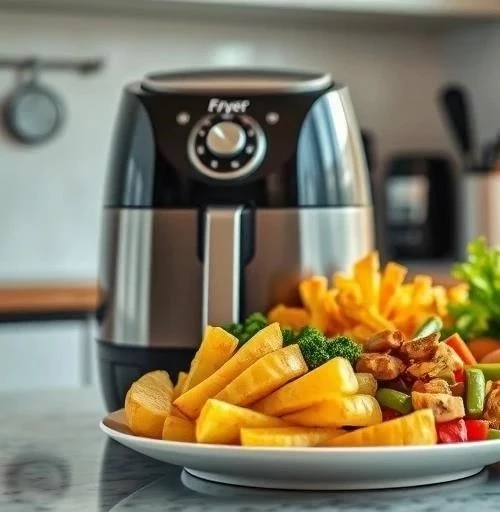
An air fryer is less a tiny deep fryer than a countertop weather system: it sends hot air racing around food, drying the surface into a crisp shell while the inside stays tender. Think of the basket as a small stage. Give each ingredient room, and the circulating heat does its best work.
Start with the crowd-pleasers
Potatoes are its natural stars. Cut them into even fries or wedges, toss with a little oil and seasoning, then cook at about 200°C (400°F) for 15–20 minutes, shaking halfway. The result is bronzed, crunchy, and excellent with a dip. Thin slices become chips; small whole potatoes turn fluffy within their skins.
Chicken is another reliable act. Pat thighs dry, season generously, and arrange them without stacking. At roughly 200°C, they often need around 20 minutes, depending on size and appliance. The skin can crisp beautifully while the meat remains juicy. Check doneness with a food thermometer rather than trusting the clock alone.
Try salmon fillets, sausages, tofu cubes, or cauliflower florets next. A light coating of oil helps browning; a little space helps even more. For a quick vegetable side, toss broccoli or carrots with oil, salt, and cumin, then cook until tender with browned edges. Shake or turn food midway through cooking.
Unexpected little triumphs
The basket can handle breakfast, too: bake eggs in small heat-safe dishes, or make a compact zucchini omelet. It can roast chickpeas into snackable crunch, warm yesterday’s pizza without making it limp, and transform apple slices into a cinnamon-scented dessert. Use oven-safe cookware, and leave room for air to move.
Small bakes are possible: muffins, hand pies, and even a striped “zebra” cake can work in a suitable tin. Lower temperatures and a little patience help the middle cook before the top overbrowns. If the surface darkens too quickly, reduce the heat or loosely shield it with foil, secured so it cannot touch the element.
A simple meal, three ways
- Season potato wedges and cook at 200°C for about 17 minutes, shaking once.
- Add seasoned chicken pieces when their cooking time fits; avoid crowding the basket.
- Serve with a quick batch of vegetables, cooked separately or in a second basket if your model allows it.
Some dual-basket machines can finish two foods together, but timing and capacity vary. Follow your appliance’s manual, and remember that temperature and cooking time are starting points—not laws of nature. A smaller, more powerful unit may finish sooner; a full basket may need longer.
The golden rules
Dry food before seasoning, use only a modest amount of oil, and arrange pieces in a single layer whenever possible. Shake fries and turn larger items for even color. Don’t pour loose batter into the basket; choose a suitable pan. Clean away crumbs and grease after cooling, so yesterday’s dinner doesn’t haunt tomorrow’s pastry.
Most of all, experiment. The air fryer is happy with crisp snacks, quick suppers, roasted vegetables, and small desserts. It won’t replace every pot or oven, but it can turn an ordinary ingredient into something with a lively crunch—and make Tuesday dinner feel like a tiny kitchen adventure.
5 Comments. Оставить новый
This turns a countertop gadget into an invitation to experiment, from roasted chickpeas to miniature bakes. Now my air fryer feels less like a shortcut and more like a tiny test kitchen.
I came for potato tips and left imagining cinnamon-scented apple slices. The playful stage-and-weather imagery gives everyday cooking a welcome spark.
The best idea here may be giving the basket room to breathe. It is a small detail with big consequences—and a useful reminder that good cooking sometimes starts with not overcrowding.
This makes the air fryer sound less like an appliance and more like a tiny, delicious wind tunnel. The practical reminders about spacing and checking doneness are especially useful.
A refreshingly realistic guide: it celebrates crisp results without pretending every basket cooks exactly alike. I appreciate the emphasis on checking food rather than worshipping the timer.