
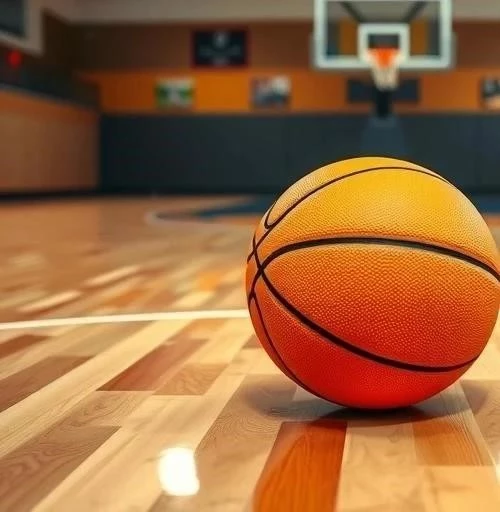
A basketball is orange chiefly because players, referees and spectators can see it clearly. The color is not a rule of physics, nor does it make the ball bounce better. It is a practical choice: the ball needs to stand out as it moves quickly among players, against the court and in front of a crowded arena.
Visibility was the key reason
Before orange became standard, basketballs were often made of dark brown leather. That color could blend into wooden floors, players’ uniforms and shadowed areas of a gym. From the stands, it was sometimes hard to follow a pass or tell exactly where the ball was. The problem mattered especially in large venues, where spectators watched from far away.
Orange offers a strong visual contrast in many indoor settings. It is bright enough to pick out during fast play, and it is generally distinct from the pale wood of a basketball court. The color also helps officials and players track the ball in their peripheral vision. Better visibility does not change the game’s rules, but it makes the action easier to follow and can help people react to it.
How orange became the familiar standard
The move to orange is commonly associated with American coach Tony Hinkle. In the 1950s, he wanted a ball that audiences could see more easily than the dark leather models then in use. Working with ball manufacturer Spalding, he helped develop an orange basketball. The new design was used in the 1958 NCAA tournament, helping introduce it to a large audience. Its visibility made a persuasive case, and orange gradually became the familiar color of the sport.
This change was not simply a matter of fashion. A ball is central to every possession, and losing sight of it can make a game confusing. A brighter color benefits people watching in the gym as well as those following a broadcast. The orange ball became a practical visual standard because it was easier to distinguish while moving quickly across the court.
Does the color affect how the ball plays?
Not in any meaningful way. A basketball’s bounce and handling depend on its construction, inflation, size and surface texture—not on being orange. The raised pebble-like surface and grooves help players grip and control it. Orange is primarily a visual choice, although the ball’s material and finish must still meet the needs of the game.
Not every basketball is orange. Training, recreational and youth balls may use other colors, patterns or combinations, and some are designed to be easier to see in particular settings. But the classic orange ball remains common because it is easy to recognize and has become part of basketball’s visual identity.
In short
Basketballs are orange mainly because the color improved visibility compared with the darker leather balls used earlier. The decision made the game easier to watch and follow, and its success helped establish orange as the sport’s best-known look. The color does not make a ball faster or bouncier; its value is simple and important: it helps everyone keep their eyes on the game.

1 Comment. Оставить новый
The article gives a clear, practical explanation of why orange became basketball’s familiar color, connecting visibility on the court with the history of Tony Hinkle’s efforts. I especially appreciate the distinction between a useful design choice and a formal rule. The account could be even stronger with a brief note that visibility can vary with lighting and court backgrounds, but it makes the central point effectively.