
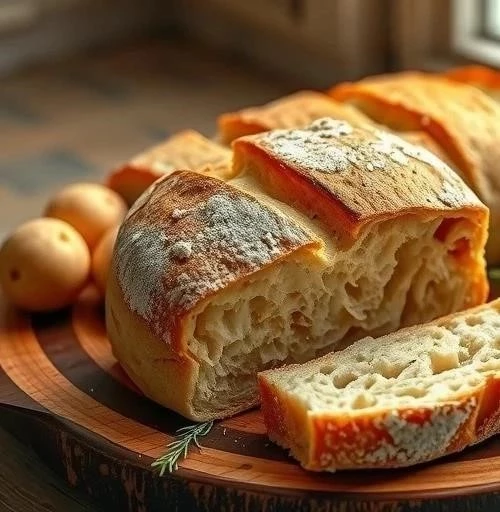
Potato ciabatta stands out because its tender crumb gives Italian bread real charm.
Choose the Right Ingredients: Wheat Flour‚ Mashed Potatoes‚ Water‚ Olive Oil‚ Salt‚ and Dry or Fresh Yeast
For a reliable potato ciabatta‚ choose strong wheat flour and smooth‚ cooled mashed potatoes: flour supplies structure‚ while potato adds softness and a gentle flavor. Measure water carefully‚ since potatoes already contain moisture; use olive oil for a supple taste and salt to balance it. Either dry yeast or fresh yeast can work‚ so select one that is fresh and suitable for your recipe. Good ingredients make the potato flavor shine.
Build Flavor and Structure Through Dough Mixing‚ High-Hydration Dough‚ and Long Fermentation
Mix the dough gently until no dry patches remain; vigorous kneading can tighten its texture. A high-hydration dough may feel sticky‚ but that moisture helps support an airy crumb‚ so resist adding excess flour; Allowing a long‚ slow fermentation develops deeper flavor and gives the structure time to mature. Track progress by expansion and light‚ lively feel‚ not by the clock; this evidence-based approach makes each batch more dependable.
Use Dough Folding and Careful Proofing to Create an Open Crumb and Crisp Crust
Fold the soft dough with damp hands‚ lifting each edge over the center; this gentle strengthening preserves the gas bubbles that help potato ciabatta develop an open crumb. Repeat only as needed‚ because rough work can press out air. Then proof the shaped loaf until slightly risen and airy‚ not swollen or fragile. Careful timing matters: sound structure and retained bubbles support a crisp crust‚ without sacrificing the bread’s interior.
Bake Homemade Bread at the Right Temperature: Oven Baking‚ Steam in the Oven‚ and the Secrets of Making Ciabatta
Bake the loaf in a fully heated oven at 230°C (450°F); steady high heat sets the crust before the potato-rich interior dries. Add a brief burst of steam at the start‚ because moisture delays crust formation and lets the loaf expand; vent it later so the surface can brown and crisp. Judge doneness by a golden color and a firm base‚ not time alone‚ since ovens vary. These choices make homemade ciabatta flavorful‚ crisp and evenly baked.



8 Comments. Оставить новый
The folding instructions are easy to picture, and the reminder to preserve gas bubbles gives a clear reason for handling the dough gently. That balance between technique and explanation strengthens the article.
The discussion of long fermentation is useful because it emphasizes judging the dough by its expansion and feel rather than relying only on a timer. This makes the guidance sound practical and adaptable.
I found the proofing advice especially helpful. Describing the desired dough as airy but not swollen gives readers a more useful cue than simply telling them to wait a set amount of time.
I appreciate the explanation of why a sticky, high-hydration dough should not be corrected with too much extra flour. That advice helps connect the dough’s texture to the airy crumb the article describes.
The recommended oven temperature and brief use of steam are presented with a clear explanation of their purpose. This makes the baking advice more convincing and helps readers see how crust and interior texture are related.
This is a thoughtful overview of the techniques that make potato ciabatta distinctive. The guidance is specific without being intimidating, though the excerpt ends before the baking section is complete.
The article clearly explains how mashed potatoes affect dough moisture, which is an important detail for avoiding a loaf that turns out too wet. Its practical ingredient guidance makes the recipe easier to approach.
The article brings together ingredient choices, fermentation, and shaping in a logical order. Its focus on how each step affects texture helps readers understand the process instead of just following instructions.