
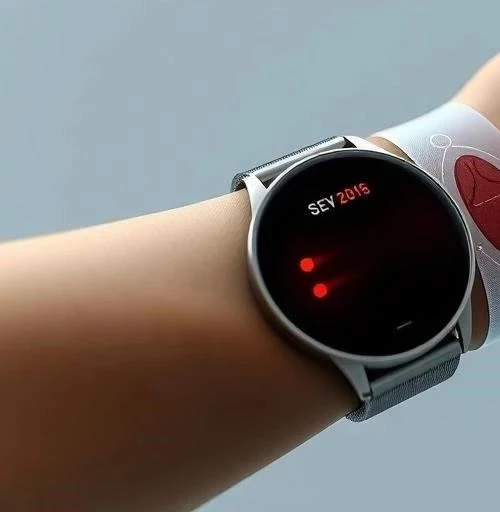
Apple Watch estimates blood oxygen saturation—often written as SpO₂—using light‚ rather than taking a blood sample. The reading represents the proportion of haemoglobin carrying oxygen in the blood. It is an estimate‚ not a direct measurement‚ and should not be treated as a diagnosis.
The optical method
On compatible models‚ sensors on the back of the watch shine red and near-infrared light into the skin at the wrist. Photodiodes then detect some of the light that returns. Oxygen-rich and oxygen-poor haemoglobin absorb these wavelengths differently‚ so the returning light changes with the blood’s composition.
Each heartbeat briefly increases blood flow through tiny vessels near the skin. The watch looks at these pulse-related changes in the detected light and compares the signals at different wavelengths. Its software uses that pattern to calculate an estimated oxygen saturation. In other words‚ the watch does not “see” oxygen itself; it infers a value from how blood absorbs and reflects light.
How a reading is taken
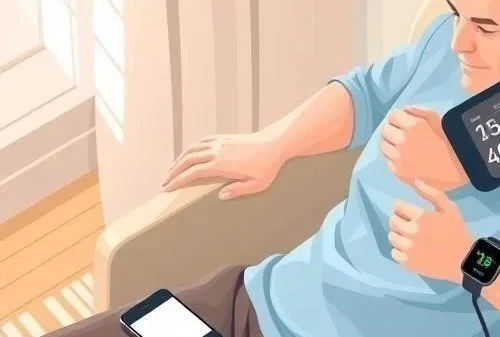
For an on-demand reading‚ open the Blood Oxygen app and rest your arm on a flat surface‚ with the watch facing up. Keep still and make sure the band fits snugly without being uncomfortable. The sensor needs steady contact and a reasonably clear optical signal; movement can disrupt it. Some compatible watches may also take background readings‚ depending on settings and circumstances.
A reading usually takes about 15 seconds. The watch may ask you to try again if it cannot obtain a reliable signal. Cold skin‚ reduced circulation‚ a loose fit‚ motion‚ or tattoos beneath the sensor can affect the result. The watch’s position matters too: a wrist measurement is more sensitive to conditions at the skin than a clinical test taken at another site.
What the number can—and cannot—tell you
Blood oxygen readings can offer general wellness information and may help you notice patterns over time. But a single result cannot establish why a value is high or low‚ and normal-looking readings do not rule out illness. Consumer wrist sensors can differ from medical instruments; readings may also vary between attempts. Do not use the watch to make urgent treatment decisions or delay medical care. If you have concerning symptoms‚ seek professional advice regardless of the number shown.
Availability depends on the Apple Watch model‚ software‚ and region. Check Apple’s current compatibility information to see whether the feature is offered for your device. For clinical monitoring‚ follow a healthcare professional’s guidance and use an appropriate medical device. The most accurate way to understand the watch’s result is as an optical estimate—not a substitute for a diagnosis.
9 Comments. Оставить новый
The explanation of pulse-related changes in blood flow is a strong point. It shows how the watch gathers information at the wrist while also acknowledging that this method is sensitive to conditions at the skin.
The article balances the technology explanation with sensible cautions. In particular, describing a reading as an estimate rather than a diagnosis is important for readers who might otherwise put too much weight on one result.
The step-by-step description of taking an on-demand reading is straightforward and easy to follow. The note that a failed reading can simply mean the watch could not get a reliable signal is reassuring and practical.
The article is informative because it covers both how the sensor works and how to improve the chance of a steady reading. Its careful wording helps readers use the feature as general wellness information rather than a substitute for clinical advice.
The comparison of how oxygen-rich and oxygen-poor haemoglobin absorb light gives a helpful overview without becoming overly technical. It also explains why the watch relies on software to interpret the returning signal.
This is a clear introduction for anyone curious about the feature. It avoids suggesting that the watch can identify the cause of a reading, which is a necessary limitation to emphasize.
It is useful that the article mentions factors such as cold skin, reduced circulation, and tattoos. These details make clear that an unexpected reading may reflect measurement conditions, not necessarily a change in health.
The explanation makes the key distinction clear: the watch estimates oxygen saturation from light signals rather than measuring oxygen directly. That helps set realistic expectations for what the number means.
I appreciate the practical advice about keeping still and wearing the watch snugly. Explaining why movement and poor contact matter makes the instructions more useful than a simple list of steps.