
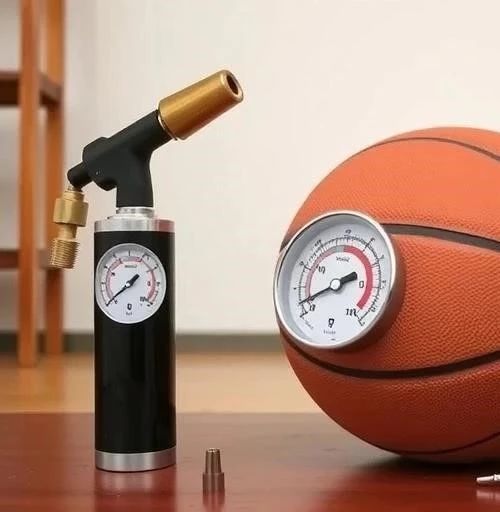
A basketball should usually be inflated to 7.5–8.5 psi (about 0.52–0.59 bar‚ or 52–59 kPa). This is the commonly used range for regulation basketballs‚ including NBA balls. However‚ the correct pressure for your particular ball is the value printed near its valve or stated by its manufacturer. That instruction takes priority: balls can differ in construction‚ size‚ and intended use.
Why the right pressure matters
Pressure affects how the ball rebounds‚ feels in the hands‚ and responds when dribbled or passed. An underinflated ball tends to bounce low‚ feel soft‚ and move less predictably. This can make dribbling and shooting harder‚ especially on a firm court. An overinflated ball may rebound too high‚ feel unusually hard‚ and be uncomfortable to catch. Excess pressure can also put unnecessary strain on the ball’s seams and bladder.
For that reason‚ “pump it until it feels hard” is not a dependable method. People judge firmness differently‚ and a ball can feel firm while still being outside its recommended range. A pressure gauge gives a more consistent result and helps avoid both poor performance and overinflation.
How to check and inflate it
- Look for the recommended pressure printed on the ball‚ often close to the valve. If it is missing‚ use 7.5–8.5 psi as a practical guide for a standard basketball.
- Use a ball pump with a pressure gauge. Moisten the inflation needle with water or a little valve-safe lubricant before inserting it; this reduces friction and the risk of damaging the valve.
- Pump in short bursts‚ checking the gauge as you go. Stop when the reading reaches the ball’s specified pressure. Do not force the needle or leave it in the valve longer than necessary.
- Remove the needle carefully and test the ball’s bounce on a firm‚ level surface. If it still behaves oddly‚ check the pressure again and inspect the ball for damage or a leaking valve.
A useful bounce check
A bounce test is a helpful backup‚ but it is not as precise as a gauge. A common check is to drop the ball from about 1.8 m (6 ft) onto a hard surface; a properly inflated ball should rebound to roughly 1.2–1.4 m (4–4.5 ft). Results vary with the floor‚ ball condition‚ and how the drop is performed‚ so treat this as a practical estimate rather than a universal rule. Keep the ball still at the release point and do not throw it downward.
Does the setting change by ball or conditions?
Indoor and outdoor balls generally use similar pressure guidance‚ but always check the manufacturer’s marking. Ball size does not automatically tell you what pressure to use. Temperature can also affect the reading: air pressure may rise in warmer conditions and fall in colder ones. If a ball has been stored in a cold garage or car‚ let it reach room temperature before checking and adjusting it.
In short: aim for the pressure specified on the ball; when no guidance is available‚ use 7.5–8.5 psi and confirm with a gauge. Correct inflation produces a controlled‚ predictable bounce—not simply the hardest-feeling ball.
2 Comments. Оставить новый
The article does a good job distinguishing a bounce test from an accurate pressure reading, which helps readers avoid relying only on feel. Its cautions about the inflation needle and overinflation are also helpful. The guidance is straightforward and relevant for anyone maintaining a basketball.
This is a clear and practical guide because it gives a typical pressure range while emphasizing that the manufacturer’s recommendation should take priority. The explanation of how pressure affects bounce and handling makes the advice useful, and the step-by-step instructions encourage safe, measured inflation.