
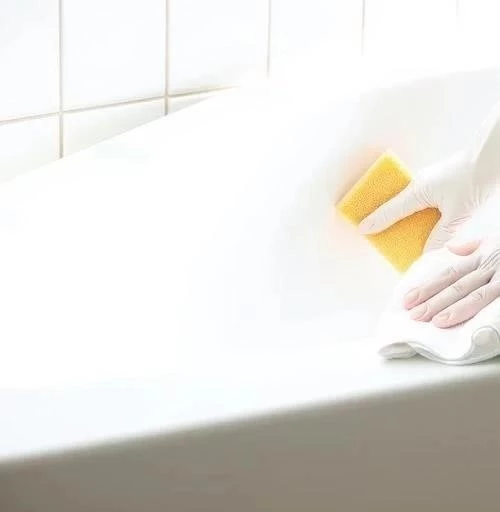
Acrylic bathtubs are smooth, lightweight and relatively easy to maintain, but their surface can be scratched or dulled by harsh cleaners and abrasive tools. For routine cleaning, use warm water, a soft cloth or non-abrasive sponge, and a small amount of mild liquid soap or dishwashing detergent. A cleaner specifically labelled as safe for acrylic is another suitable option; follow its instructions and the bathtub manufacturer’s care guidance.
Everyday cleaning
- Rinse the tub with warm water to remove loose dirt, soap and hair.
- Apply a little mild detergent to a soft cloth or sponge. Clean the surface with light pressure, working around the basin, sides and fittings.
- Rinse thoroughly so no cleaner remains, then wipe the tub dry with a clean, soft towel. Drying helps limit water marks and soap residue.
Regular, gentle cleaning is usually more effective than waiting until deposits have built up and then scrubbing forcefully. After bathing, a quick rinse and wipe can reduce the accumulation of body oils and soap scum. Use a separate soft cloth for taps and other fittings if their finish requires different care.
Soap scum and ordinary stains
For a visible film or a fresh stain, first try warm water and mild detergent, allowing the solution to sit briefly before wiping. If this is not enough, choose a non-abrasive bathroom cleaner whose label specifically permits use on acrylic. Test an unfamiliar product on a small, inconspicuous area, rinse it away, and check the surface before treating the whole tub. Do not leave a cleaner on the acrylic longer than its directions allow.
Hard-water deposits may need a product designed for acrylic and mineral scale. Acidic remedies, including vinegar or descaling solutions, are not suitable for every bathtub or finish. Use them only if the manufacturer says they are safe, and follow the stated dilution and contact time. Never combine cleaning products: mixing chemicals can create hazardous fumes or reactions.
What to avoid
Do not clean acrylic with scouring powder, abrasive cream, steel wool, rough scrub pads, or stiff brushes. These can leave fine scratches that make the surface look cloudy and may make future cleaning harder. A melamine “eraser” sponge can also be abrasive, so avoid it unless the tub’s manufacturer explicitly approves it.
Avoid solvents and strong chemicals such as acetone, paint thinner, gasoline, and products not intended for acrylic. Strong acids, alkalis, concentrated bleach, and some drain or oven cleaners may damage the finish. Do not assume that a product is safe just because it is sold for bathrooms: read the label and check for an acrylic-surface warning. Keep drain cleaners away from the tub surface, and rinse splashes immediately.
Care and minor marks
Do not use knives, metal scrapers, or other sharp tools to remove stuck-on material. Soften residue with warm water and detergent, then lift it gently with a soft cloth. For a small scratch or loss of shine, use only a polishing product or repair kit approved for acrylic, following its directions. Deep cracks, persistent discoloration, or damage around the drain may need professional assessment rather than more vigorous cleaning.
When in doubt, use the gentlest method: warm water, mild soap, a soft cloth, thorough rinsing, and drying. Product instructions can vary between tubs, so the care manual takes priority. This approach helps preserve the smooth finish while removing routine dirt without unnecessary abrasion or chemical exposure.

2 Comments. Оставить новый
The advice is organized around everyday cleaning and common stains, making it easy to follow. The cautions about testing unfamiliar products and checking manufacturer guidance help address differences between bathtub materials and finishes.
The article provides clear, practical guidance on routine acrylic bathtub care, including the use of soft cleaning tools and mild products. Its reminders to check product labels and avoid mixing cleaners are useful.