
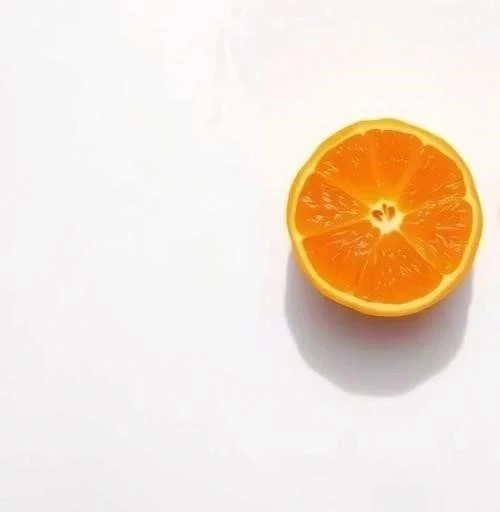
A word can be a fruit, a smell, a bright spot on a winter table—and, when it reaches the end of a line, a small puzzle. The Russian word апельсин (“orange”) is a neat example. If you need to carry it over to the next line, the standard division is:
апель-син
In other words, write апель- at the end of one line and continue with син on the next. The hyphen marks a word continued after a line break; it does not change the spelling or meaning. The orange remains whole, even when the word has to take a little linguistic detour.
The quick answer
- Correct: апель-син
- Not correct: а-пельсин, this leaves a single letter by itself.
- Not correct: апе-льсин, the soft sign must stay with the consonant before it.
So if a teacher, editor, or word-processing exercise asks, “How do you переносить апельсин?”—that is, how do you divide it at a line ending—the useful answer is апель-син.
Why this is the natural break
First, look at how the word sounds. Its syllables are а-пель-син: three gentle beats, like three taps on the skin of a fruit. But dividing a word into spoken syllables and choosing a permitted line break are related tasks, not always identical ones. A line cannot be left with a lonely one-letter fragment, so the first syllable, а, cannot stand by itself at the end of a line. The convenient break comes after пель: апель-син.
The little sign in the middle matters too. The letter ь, called the soft sign in Russian, has no independent sound. It softens the consonant before it, so it is not peeled away and sent to the next line on its own. In апель-син, the soft sign stays safely beside л. Think of it as the orange’s small linguistic leaf: it belongs to the stem immediately before it, not to a separate piece.
A closer look at the word
Here is the spelling in slow motion:
а – п – е – л – ь – с – и – н
The spoken rhythm is а / пель / син. The first sound is a vowel and forms a syllable, but a one-letter piece is not allowed to hang alone at a line ending. The next useful boundary is after the soft sign: апель | син. This gives two readable chunks, keeps the spelling intact, and avoids stranding either a single letter or the soft sign.
That is why it helps to ask two questions instead of one: “Where are the syllables?” and “Which of those boundaries makes a valid written transfer?” For this word, the answers fit together neatly once the single-letter restriction is taken into account.
Common traps, peeled one by one
Leaving “а” behind
А-пельсин may look tempting if you follow the spoken syllables mechanically. But the first part would be just one letter. Standard Russian transfer rules do not allow a single letter to be left on one line or carried over alone. Give that little а company: keep it with the rest of the word.
Sending the soft sign away
Апе-льсин breaks the word between е and ь. That separates the soft sign from the consonant it modifies. Russian spelling keeps ь attached to the preceding consonant, so this is not the right place for the hyphen.
Confusing a pause with a break
A person may pause after any syllable while speaking, but a typesetter cannot put a hyphen at every possible pause. Line division follows spelling conventions, not just breath. When in doubt, use the established transfer апель-син rather than inventing a more dramatic cut.
What if the line is narrow?
Good typography is not only about whether a break is permitted. It is also about whether it looks calm on the page. If the line is too short to hold апель-, the cleanest solution may be to move the whole word to the next line, widen the text area, or adjust the layout. Avoid forcing an awkward break merely to rescue one line. A page should feel like a well-set table, not a fruit bowl knocked over in a hurry.
In a poem, poster, or playful design, you might want to make апельсин look as if it has burst open. Creative typography can experiment with spacing and placement, but ordinary spelling exercises and edited prose should use the standard division. Style may squeeze the fruit; it should not scramble the word.
Remember it with a miniature orange
Picture the word as an orange made of three sound-sections: а, пель, and син. The first section is too small to leave alone. The soft sign is attached to л, like a tag that cannot be cut off its string. The safe line-break seam is therefore between пель and син:
апель-
син
This is the whole trick in one image: do not abandon the tiny vowel, do not detach the soft sign, and let the word open at its natural seam.
Final answer
To переносить the Russian word апельсин—to continue it across a line—write апель-син. Its syllables are а-пель-син, but the one-letter syllable cannot be left alone. Keep ь with the consonant before it, and the correct transfer becomes easy to remember. One small hyphen, one bright orange, and no orphaned letters.

2 Comments. Оставить новый
This turns a tiny spelling rule into a miniature portrait of how language carries meaning across a gap. The image of the soft sign as a leaf is especially memorable: practical enough to teach, whimsical enough to stay.
A fruit becomes a surprisingly good guide to Russian orthography here. I like how the article distinguishes the rhythm of spoken syllables from the rules of a line break—it gives the reader more than an answer; it offers a small new way to look at words.