
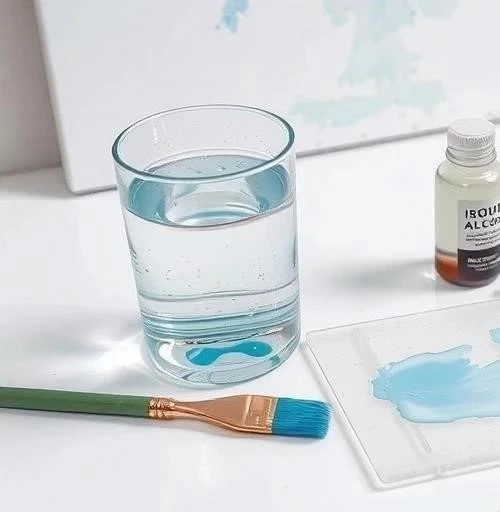
The right way to remove acrylic paint depends mainly on whether it is still wet, whether it has dried, and what it is stuck to. Fresh acrylic paint is water-based and can usually be thinned or washed away with water. Once dry, it forms a flexible plastic-like film that resists water, so removal is harder. There is no single solvent that is safe and effective for every surface.
When the paint is still wet
Act promptly. Blot excess paint with a disposable cloth or paper towel, taking care not to spread it. Rinse washable fabric or tools with cool or lukewarm water, then use ordinary soap or dish detergent. For brushes, work water and brush soap through the bristles and rinse until the water runs clear. Do not leave brushes standing in water: prolonged soaking can loosen the ferrule or distort the bristles.
On a nonporous surface, wipe up the paint with a damp cloth and mild detergent. On skin, wash with warm water and soap; do not use paint thinner or other harsh solvents. If paint has spilled on clothing, rinse from the back of the fabric where possible, and check the care label before using a stain treatment. Heat from a dryer can make a remaining stain more difficult to remove.
When the paint has dried
Water alone is usually ineffective on a cured acrylic layer. Start with the least aggressive method: gently lift or scrape the paint with a plastic scraper, then test a small amount of mild detergent and warm water. On a hard, nonporous item, isopropyl alcohol may soften some acrylic films. Apply it to a cloth, dab the paint, and allow a short contact time before gently rubbing or scraping. Repeat only if the surface remains undamaged.
Alcohol can discolor, dull, soften, or crack plastics, varnish, coatings, and some finishes. Test it first in a hidden spot. Avoid applying it to painted surfaces you want to preserve, delicate fabrics, or valuable objects without expert advice. Acetone and lacquer thinner can also attack acrylic paint, but they are strong solvents and may damage the underlying material even faster. They are not suitable as universal removers.
Choose a method for the surface
- Glass or glazed tile: A plastic scraper and soapy water may remove residue. A razor scraper may be suitable for flat glass, but hold it at a shallow angle and avoid coatings, edges, and textured areas.
- Wood: Test carefully. Scraping, sanding, alcohol, or a commercial remover can damage the finish or stain. For a valuable or finished item, consult a restoration professional.
- Fabric: Dried paint is difficult to remove because it binds to fibers. Carefully lift what you can without cutting the fabric, then try a fabric-compatible stain treatment after a hidden-area test. Results are not guaranteed.
- Brushes and tools: For dried paint, use a cleaner specifically labeled for dried acrylic, following its instructions. Some products soften paint rather than dissolve it completely.
- Walls or painted objects: Removing the acrylic may also remove the original coating. Test an inconspicuous area and consider repainting instead of using a strong solvent.
Commercial removers and safety
Products sold as acrylic or paint removers vary in ingredients and intended uses. Read the label to confirm that the product is meant for the paint and surface in question. Follow the stated contact time, ventilation, protective-equipment, and disposal instructions. Do not mix cleaners or solvents: combinations can release hazardous vapors or cause other dangerous reactions.
Work with good ventilation, wear suitable gloves, and keep solvents away from flames, sparks, children, and pets. Never pour leftover solvent or paint residue into a drain unless the product label and local rules specifically allow it. Collect used cloths and waste as directed on the label.
In brief
Water and soap are generally best for fresh acrylic paint. For dried paint, careful scraping or a small, tested application of isopropyl alcohol may help on compatible hard surfaces; a purpose-made remover may be needed for stubborn residues. Because solvents can harm the material beneath the paint, identify the surface, test first, and use the mildest effective method.



7 Comments. Оставить новый
The section on brush care is practical, particularly the warning against leaving brushes standing in water. It adds helpful detail beyond basic stain removal.
The article clearly explains why dried acrylic paint is more difficult to remove than wet paint. The suggested progression from gentle methods to stronger options is sensible.
The guidance covers several common surfaces and emphasizes testing cleaning products before use. That caution is important when dealing with finishes that may be damaged.
This is a clear overview of basic acrylic paint cleanup. It gives practical first steps while noting when stronger products may pose a risk to the material.
The distinction between wet and dried acrylic paint makes the advice easy to follow. The reminders to act promptly and avoid spreading wet paint are useful.
The warnings about alcohol, acetone, and delicate finishes help readers understand that removal methods depend on the surface. The instructions are straightforward.
The advice for skin and clothing is presented with appropriate caution. Checking fabric care labels and avoiding harsh solvents are useful reminders.