
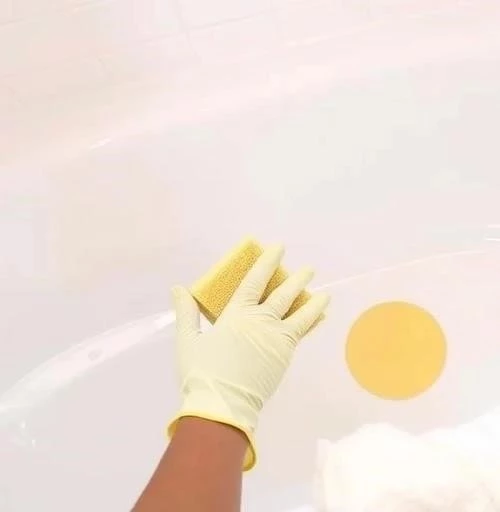
Yellow marks on an acrylic bathtub can come from soap residue, body oils, hard-water minerals, iron in the water, or gradual wear of the surface. Start with the mildest cleaning method: acrylic can scratch or lose its shine when exposed to abrasive pads and harsh chemicals. Check the tub manufacturer’s care instructions first, especially if the bath has a special coating.
What you will need
- Soft microfiber cloths or a non-scratch sponge
- Warm water and mild, non-abrasive dish soap
- White vinegar, if permitted by the manufacturer
- A soft towel for drying
Routine cleaning for light yellowing
- Rinse the tub with warm water to loosen surface residue.
- Add a small amount of mild dish soap to a damp, soft cloth or sponge.
- Wipe the discolored area gently, using circular motions. Do not press hard or use a rough scouring pad.
- Rinse thoroughly so that no soap film remains, then dry the surface with a clean towel.
Repeat the gentle wash if needed rather than scrubbing aggressively. Removing soap and oil buildup often improves the appearance of light yellow marks. Drying the tub after use can also reduce mineral spots and residue.
For mineral deposits and persistent marks
If the manufacturer allows vinegar, mix equal parts white vinegar and warm water. Dampen a cloth with the solution, place it over the mark for a few minutes, then wipe gently and rinse well. Do not leave vinegar on the acrylic for a long time, and do not use it on a surface whose care guide advises against acids. Test any cleaner on a small, inconspicuous area first;
For a stubborn deposit, repeat a short application rather than increasing the concentration or leaving the solution to soak. A cleaner specifically labelled safe for acrylic baths is another option; follow its label, including contact time and rinsing instructions. If the mark does not lift, avoid escalating to abrasive powders or stronger chemicals.
What to avoid
- Scouring powder, abrasive cream, steel wool, and rough scrubbers can scratch the finish.
- Bleach, ammonia, acetone, nail-polish remover, drain cleaner, and other solvents may damage or dull acrylic. Use them only if the tub maker explicitly approves the product.
- Do not mix cleaning products. In particular, never combine bleach with vinegar, ammonia, or another cleaner; hazardous fumes can result.
- Avoid boiling water and prolonged soaking with a cleaning solution. Use warm water and follow product directions.
Wear household gloves if appropriate, ventilate the room, and keep cleaners away from children and pets. If a product causes discoloration, cloudiness, or a change in texture, rinse it off immediately and stop using it.
When yellowing does not come off
Yellowing may be within the acrylic rather than on top of it. Sunlight, age, heat, or surface wear can change the material’s color, and ordinary cleaning will not reverse that change. A damaged or worn finish may also hold stains more readily. Do not sand or polish the tub unless the manufacturer recommends a specific repair method; improper treatment can make the surface look worse. Ask the manufacturer or a qualified bath-repair professional about suitable restoration options.
How to help prevent it
Rinse away soap and bath products after each use, wipe the tub dry, and clean it regularly with a mild product approved for acrylic. Use a soft cloth and avoid leaving colored bath products or cleaning solutions on the surface. If hard water is a recurring issue, regular rinsing and drying can limit mineral buildup. These habits will not prevent age-related color changes, but they can reduce removable residue and help preserve the finish.
In brief: wash yellowing first with mild soap and a soft cloth, rinse and dry thoroughly, and use a brief vinegar treatment only when the manufacturer permits it. Avoid abrasive tools, unapproved chemicals, and mixtures of cleaners.


8 Comments. Оставить новый
The distinction between ordinary residue and mineral deposits helps explain which cleaning approach to consider.
The suggested supplies are simple, and the instructions focus on gentle cleaning and thorough rinsing.
The reminders to check the manufacturer’s care instructions and test cleaners on a small area are useful.
The article provides practical guidance while noting that vinegar may not be suitable for every bathtub.
The cautions about abrasive pads and harsh chemicals are relevant for protecting acrylic surfaces.
The advice to repeat a mild treatment rather than use stronger products offers a cautious approach.
The step-by-step routine is easy to follow and emphasizes rinsing and drying the tub.
The article clearly explains why yellow marks can appear and recommends starting with gentle cleaning methods.