
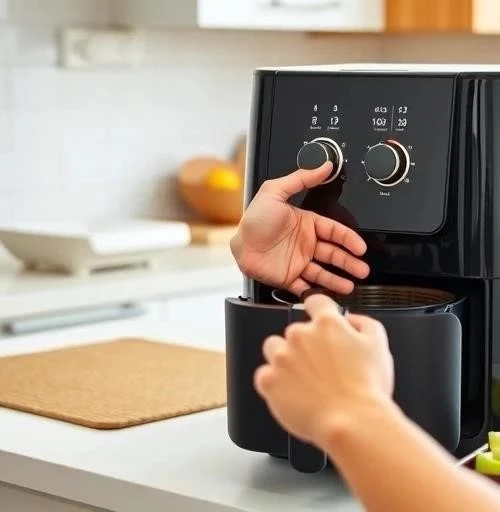
A Xiaomi air fryer is less a miniature oven than a tiny weather system for dinner: hot air swirls around food, turning its outside crisp while the inside stays tender. Setting it up is straightforward, but a few thoughtful steps make the first meal safer, tastier, and less mysterious; Exact menus and features vary by model, so treat the instructions supplied with your appliance as the final word.
Find its landing place
Set the fryer on a stable, level, heat-resistant surface with open space around its ventilation outlets. Keep it away from curtains, paper, the edge of the counter, and anything that could be damaged by hot air. Don’t push it beneath a low cupboard while it is running: the appliance needs room to breathe. Check that the plug and your hands are dry before connecting it to the wall.
Remove all packaging, stickers, and accessories from the basket and cooking chamber. Wash the removable basket and tray with warm water and dish soap, then dry them completely. Wipe the interior with a soft, slightly damp cloth. Never immerse the main unit in water, and don’t scrub the non-stick coating with metal tools or abrasive pads.
Give it a clean first run
Some new appliances have a faint factory smell. If your manual allows it, run the empty fryer for around 10–15 minutes at a moderate-to-high temperature in a well-ventilated room. A little new-appliance odor can be normal; smoke, a burning-plastic smell, or unusual noises are not. Switch it off, unplug it, and check the manual if anything seems wrong.
Connect the Xiaomi app (if your model supports it)
Smart features are optional: you can cook perfectly well using the fryer’s buttons or screen. For app control, install Xiaomi Home (also called Mi Home in some regions), sign in, and choose the correct country or region. Tap the add-device button and follow the on-screen prompts. Keep your phone near the fryer during pairing.
Many smart home appliances require a 2.4 GHz Wi-Fi network; some do not support 5 GHz-only networks. Check your model’s instructions before troubleshooting. Make sure Bluetooth and location permissions are enabled if the app requests them, and connect to a network with a clear, ordinary password. If pairing stalls, restart the fryer and router, confirm the app’s region matches the device, and try again. Don’t share your Wi-Fi password or account details with strangers offering “setup help.”
Learn the controls before dinner
Put the tray or crisper plate in the basket in the arrangement shown in the manual. Slide the basket fully into the appliance; many fryers won’t heat correctly if it is not seated. Select a preset or set the temperature and time yourself. Presets are useful starting points, not kitchen commandments: food thickness, starting temperature, quantity, and your preferred crispness all change the result.
- Frozen fries: Try about 180–200°C for 15–25 minutes, shaking once or twice.
- Vegetables: Start around 180–190°C for 10–18 minutes; cut pieces to a similar size.
- Chicken pieces: Use a suitable recipe and verify that the thickest part reaches a safe internal temperature.
- Reheating: A few minutes at a moderate temperature can refresh pizza or pastries without making them soggy.
These are starting ranges, not guarantees. Check food early the first time, especially if your fryer is compact or your portions are small. For meat, use a food thermometer rather than judging safety by browned surfaces alone. Follow reliable food-safety guidance for the type of food you are cooking.
Make the air do its job
A basket crowded like a rush-hour train traps steam and blocks airflow. Arrange food in a loose layer where possible, and cook in batches when needed. A small amount of oil can help vegetables and potatoes brown; toss it with the food rather than pouring oil into the appliance. Avoid aerosol sprays if the manufacturer warns they can damage the coating.
Turn or shake food when appropriate, using heat-safe utensils. If you open the basket to check progress, beware of escaping hot air. Don’t line the basket with loose parchment while preheating: a fan can lift it onto the heating element. Use liners only when permitted, and keep them weighed down by food.
After the last crisp bite
Switch off and unplug the fryer, then let it cool. Wash the basket and tray according to the manual, dry them thoroughly, and wipe crumbs from the chamber with a soft cloth. Clean the heating area only when cool, and never pour water into the unit. Regular cleaning prevents old grease from turning tomorrow’s dinner into an unexpected smoke signal.
When setup misbehaves
- The fryer won’t start: Check the outlet, plug, and whether the basket is fully inserted.
- Food is pale or uneven: Reduce crowding, shake or turn it, and add a little cooking time.
- There is smoke: Stop cooking if it seems excessive; Let the unit cool and clean away grease or crumbs; consult the manual if smoke continues.
- The app can’t find it: Check Wi-Fi band, permissions, region, and the model’s pairing instructions.
Once the first setup is done, the best setting is the one you discover by keeping notes: food, quantity, temperature, time, and whether you shook the basket. In a few meals, you’ll have a personal map to crisp, reliable results—and your Xiaomi will feel less like a gadget and more like a cheerful little sous-chef.


4 Comments. Оставить новый
The “tiny weather system for dinner” is a delightful way to make an appliance feel less like a box and more like a culinary planet. The practical safety advice keeps the metaphor grounded—and useful.
A good first-use guide should lower the temperature of uncertainty before raising the cooking temperature. This one does exactly that, balancing practical cautions with a pleasantly imaginative opening.
The piece has a reassuring voice: it welcomes smart features without pretending an app is essential. That small distinction gives readers permission to cook dinner without first negotiating with their Wi-Fi.
I appreciate that this guide treats setup as part of the cooking, not a tedious prelude. Its reminders about airflow and heat-resistant surfaces are the quiet stagehands behind a successful first meal.