
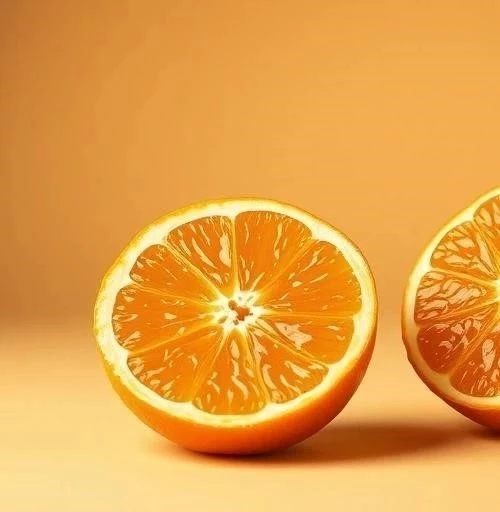
The familiar color of an orange is the result of natural pigments in its peel and changes that take place as the fruit ripens. The name of the color and the name of the fruit are closely connected in English, but the color itself has a biological explanation: pigments absorb some wavelengths of light and reflect others. An orange peel reflects relatively much orange and yellow light, which is why it appears orange to a human observer.
Pigments in the peel
In an unripe citrus fruit, the peel often contains chlorophyll, the green pigment also found in leaves. Chlorophyll absorbs much of the red and blue light used in photosynthesis and reflects green wavelengths. As the fruit matures, chlorophyll breaks down. At the same time, yellow and orange pigments called carotenoids become more visible or accumulate in the peel. These pigments absorb some wavelengths, especially in the blue part of the spectrum, and reflect more yellow, orange, and red light.
Carotenoids are a broad group of compounds found in many plants. They contribute to the colors of carrots, pumpkins, autumn leaves, and numerous fruits. In oranges, several carotenoids can be present, including beta-carotene and related pigments. Their particular mixture, amount, and distribution help determine the shade of the peel, which may range from pale yellow to deep orange. The flesh also contains pigments, though its color does not always match the outside.
Ripening and temperature
Color is associated with ripeness, but it is not a perfect measure of it. As an orange matures, its peel can lose green chlorophyll and reveal carotenoids. However, the timing and strength of this change depend partly on growing conditions, including temperature. In many citrus-growing regions, cool nights encourage chlorophyll breakdown and the development of a bright orange appearance. Where conditions remain warm, ripe fruit may retain some green in the peel.
For this reason, an orange can be ripe and sweet while still looking greenish or yellow. Conversely, a strongly colored peel does not by itself guarantee a particular level of sweetness. Farmers and sellers use other indicators, such as the fruit’s size, firmness, aroma, and taste, when judging quality. Some commercially sold citrus may also be treated after harvest to produce a more uniform appearance; the exact rules and practices vary by location.
Why some oranges look different
Not every orange is the same color. Variety, climate, growing season, and the stage of ripening all affect pigmentation. Some oranges have a yellow-orange peel, while others become more reddish. Blood oranges can develop red or maroon flesh because they produce anthocyanins, a separate group of pigments. These red pigments are influenced by factors such as temperature and variety and are not what makes the usual orange peel orange.
Citrus fruits grown in tropical climates may remain green even when mature. Warm conditions can slow the loss of chlorophyll, masking the yellow and orange pigments beneath it. A green peel therefore does not necessarily mean that a fruit is unripe. The same principle can be seen in many plants: visible color reflects both the pigments present and the environmental conditions that affect them.
How we see the color
The peel does not produce orange light on its own. Sunlight or another light source strikes its surface, and pigments absorb some of that light while reflecting the rest. The reflected light enters the eye, where cone cells respond to different ranges of wavelengths. The brain interprets the combined signal as a color. Under different lighting, the same fruit can appear slightly more yellow, duller, or darker because the light reaching the eye has changed.
In short, oranges appear orange mainly because ripening reduces green chlorophyll and makes carotenoid pigments visible. Their final shade depends on the fruit’s genetics, environment, and maturity, as well as the light in which it is viewed. The familiar color is therefore not a fixed requirement of the fruit: it is the visible outcome of plant chemistry interacting with growing conditions and human perception.


3 Comments. Оставить новый
The article clearly explains how pigments influence the color of an orange peel. The distinction between chlorophyll and carotenoids makes the topic accessible.
The article is organized around the main factors that affect orange color, making it easy to follow. Its examples of carotenoids in other plants help place the explanation in a broader context.
The discussion of temperature adds useful context to the relationship between peel color and ripeness. It also appropriately notes that color alone is not a reliable measure of sweetness or maturity.