
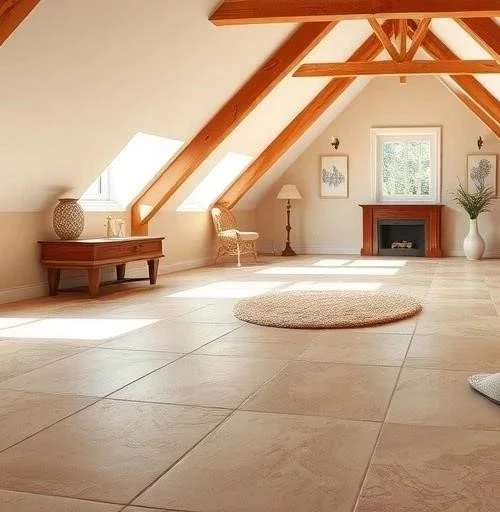
An attic can feel like a hideaway above the weather: a reading room under the rafters‚ a bright studio‚ or a tiny guest suite. Porcelain stoneware in the attic gives this space a crisp‚ durable surface—but it is not a carefree choice. The right decision depends on structure‚ insulation and the way you use the room.
Why choose it?
Porcelain tile is fired at high temperatures‚ making it dense and hard-wearing. Its strength and wear resistance suit busy rooms‚ while low water absorption gives it excellent moisture resistance. That matters if the attic contains a bathroom‚ laundry area or a plant-filled corner. Some products also offer frost resistance‚ useful in an unheated space‚ though the whole floor assembly must be designed for cold conditions.
For attic finishing‚ tile opens up unexpected design possibilities. Stone-look surfaces can echo an old roof‚ while large-format pieces make a compact room feel calmer. Tile can also continue from the attic floor onto selected attic walls‚ creating a neat visual link between zones. Choose a slip-resistant surface for stairs‚ bathrooms and other places where wet feet may appear.
The weight question
The main drawback is weight. The weight of porcelain stoneware‚ adhesive and any screed adds load to the joists. Before floor cladding begins‚ have a qualified professional check the load on the ceiling structure; never assume a timber attic floor can carry a heavy finish. A lighter tile does not remove the need for this assessment.
Porcelain has high thermal conductivity: it transfers heat quickly‚ which is pleasant with a compatible underfloor heating system but can feel cold without one. Good floor insulation beneath the structure is essential. Tile itself provides little sound insulation‚ so footsteps may travel to rooms below. Acoustic layers can help‚ but must be selected to work with the subfloor and heating system.
Installation and everyday life
Successful porcelain tile installation starts with substrate preparation. The base must be stable‚ flat and stiff; movement can crack tiles or grout. A screed may be appropriate‚ but its thickness and weight need checking. If underfloor heating is planned‚ follow the system maker’s requirements and allow the screed to dry and warm up gradually. Flexible adhesive‚ careful joint spacing and suitable grout joints complete the build-up.
Care is simple: sweep grit away‚ mop with a mild cleaner and avoid harsh products that can damage grout. Replace a cracked tile promptly‚ since water can reach the layers below. Cost of finishing varies with tile format‚ pattern‚ subfloor work and labour; intricate layouts and large slabs usually demand more skill.
Verdict
The advantages of porcelain stoneware are durability‚ moisture resistance‚ easy cleaning and wide design choice. Its disadvantages are weight‚ a potentially cold feel‚ limited sound absorption and demanding installation. As a flooring material‚ it shines when the structure is approved‚ insulation is planned and the surface suits the room’s use. Treat the attic as a complete building system—not merely a place to lay beautiful tile—and its performance characteristics can reward you for years.




7 Comments. Оставить новый
The image of tile echoing an old roof is lovely. Even better is the clear warning that a gorgeous finish cannot compensate for a floor that was never designed to carry it.
This makes attic tile feel less like a décor decision and more like a conversation with the house itself. The reminder to check the joists before falling for a beautiful slab is especially valuable.
This turns a material choice into a whole-room design question. I appreciate the distinction between tile being moisture-resistant and the complete floor assembly being ready for cold conditions.
Clear, imaginative, and sensibly cautious. The best takeaway is that a tile sample should be judged alongside the joists, insulation, and intended use—not just under the showroom lights.
A smart, grounded guide. The detail about sound traveling downstairs is easy to overlook; nobody wants their peaceful reading nook to announce every footstep to the whole house.
The attic is often treated as a cozy afterthought, yet this article shows how many systems meet up there—weight, warmth, sound, moisture. A useful map for anyone planning to turn rafters into real living space.
I like the balance here: porcelain gets its moment, but the roof structure gets the final word. That is the sort of practical advice that can save a renovation from becoming an expensive science experiment.