
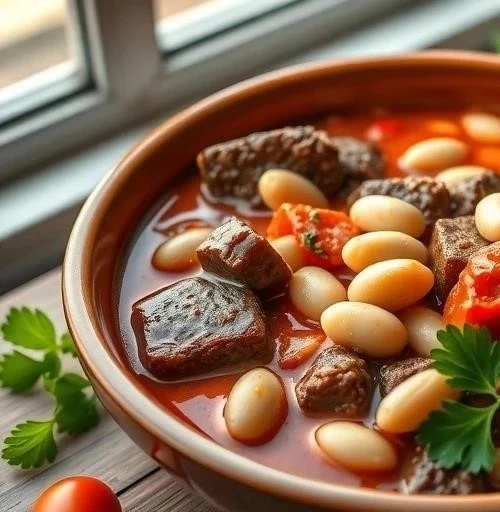
Why Italian-Style Beef Goulash with Beans Makes a Hearty Lunch
This Italian-style beef-and-bean lunch is hearty: its protein and rich, slow-cooked flavor sustain energy, while a balanced portion keeps diners satisfied through the afternoon.
Build the Flavor Base: Beef, Beans, Onion, Garlic, Sweet Pepper, Tomatoes, and Tomato Paste
For a convincing Italian-style goulash, build the base in a deliberate order: beef provides substance, while beans make each serving more filling. Onion and garlic deserve an early place because their savory sweetness forms a clear foundation rather than a sharp aftertaste. Add sweet pepper for gentle freshness, then tomatoes and tomato paste for complementary reasons: tomatoes bring juicy acidity, and concentrated paste deepens their character. Together, these ingredients create a balanced, recognizable flavor profile, so no single element overwhelms the others. Cut the beef into even pieces and chop the vegetables uniformly; consistent sizes help them mingle and make every spoonful cohesive. Stir the beans in with care, preserving their shape, and let the tomato-coated ingredients define the dish. This combination is persuasive because it layers richness, sweetness, freshness and tang using fresh, familiar produce.
Argue for Deeper Flavor: Olive Oil, Soy Sauce, Red Wine, and Meat Broth
Olive oil, soy sauce, red wine, and meat broth each has a role since they boost flavor in a different, complementary way. Olive oil carries aroma and helps the sauce feel rounded, while soy sauce contributes savory depth without requiring a heavy hand. That distinction matters: the oil supports a smooth base, but the sauce adds a focused, gently salty savoriness. Red wine brings acidity and a restrained fruit note; as it cooks, it can soften the sauce’s edges and make the beef taste more integrated. Meat broth, by contrast, supplies savory liquid and steadies the intensity, so the result tastes substantial rather than sharp. Using all four thoughtfully is more convincing than relying on one: olive oil rounds, soy sauce amplifies, wine lifts, and broth binds. Measure the liquids with restraint, since a balanced blend lets each contribution stay clear; that is what gives the goulash depth without flattening flavor.
Why Italian Herbs—Basil, Oregano, and Rosemary—Belong with Paprika, Black Pepper, and Salt
Basil, oregano, and rosemary bring Italian character; paprika adds warmth, while black pepper and salt balance it, making each seasoning essential by giving depth without excess.
Make Stovetop Simmering in a Pot the Key to Tender Stewed Beef, an Aromatic Dish, and a Satisfying Side Dish for Goulash
Stovetop simmering is the sound method for turning beef into tender stew, because steady, gentle heat softens its fibers without driving moisture from the pot. Keep the pot at a quiet simmer, not a rolling boil; this patient pace gives connective tissue time to soften and keeps the beef succulent. A covered pot limits evaporation, while occasional checks let you judge tenderness and prevent the bottom from catching; frequent stirring is unnecessary. Allow enough time for the pieces to yield easily to a fork, then rest the pot briefly off the heat so juices settle and the texture stays even. The result is an aromatic dish with tender beef and a cohesive sauce, substantial enough to serve as a satisfying side dish for goulash or as the centerpiece of a simple meal. That care matters: rushing toughens meat, whereas gentle heat protects texture and makes the finished serving reliably enjoyable.



4 Comments. Оставить новый
The discussion of olive oil, soy sauce, red wine, and broth is especially useful because it explains their separate roles instead of treating them as interchangeable seasonings. Readers can use that reasoning to adjust the flavor thoughtfully and avoid making the sauce too salty or sharp.
I appreciate the practical emphasis on cutting the beef and vegetables evenly. That small preparation detail can improve consistency in both cooking and serving, while the advice to handle the beans carefully shows consideration for the finished texture.
The article makes a convincing case for layering familiar ingredients rather than relying on one dominant flavor. Its explanation of how tomatoes, tomato paste, wine, and broth each contribute differently helps readers understand why the dish can taste balanced and substantial.
The article presents the meal as hearty without overlooking balance, linking its filling ingredients to a satisfying lunch. The clear organization also makes the flavor-building advice easy to follow, although specific cooking times would make the guidance even more actionable.